Roof Repair Tips for Singapore Homeowners
Singapore Roofing, Roof Repair, Homeowner Questions, Roof Maintenance
Roof Repair in Singapore: Common Questions Homeowners Should Ask Before It Gets Worse
In Singapore’s hot, humid and stormy climate, roof problems rarely fix themselves. A small stain on your ceiling or a loose panel on your awning can quickly turn into leaks, structural damage, or expensive emergency repairs. Knowing the right questions to ask your roofing contractor helps you act early, avoid unnecessary costs, and choose materials that actually suit local conditions.
Why Singapore Roofing Demands Extra Attention
Roofs in Singapore work harder than many homeowners realise. They face intense UV exposure, sudden downpours, strong winds, and high humidity almost all year round. Whether you live in a landed property or manage a commercial building, your roofing system is constantly expanding, contracting, and shedding water. Over time, this stresses everything from tiles and Aluminium Composite Panel (ACP) cladding to sealants around your polycarbonate roof or glass roof structures.
Because of this, roof repair in Singapore is less about one-time fixes and more about smart, regular roof maintenance. The earlier you spot issues, the simpler and cheaper they are to address. That starts with asking your contractor clear, practical questions before you agree to any work.
Question 1: What Is Actually Causing the Problem?
A visible leak or crack is often just a symptom. Before approving repairs, ask your contractor:
Where exactly is the source of the leak or damage? Is it from broken tiles, worn sealant, or corroded screws on your metal or ACP roof cladding?
Is the issue localised or widespread? A single cracked polycarbonate roof panel is very different from a design flaw affecting the entire structure.
Is poor drainage involved? Blocked gutters, downpipes, or scuppers can push water under tiles and into ceilings.
Request photos or a short video of the affected areas. For structures like a pergola or glass roof canopy, ask your contractor to show you the condition of the joints, flashing, and support beams, not just the visible surface. This helps you understand whether you are treating the root cause or just patching symptoms that will return with the next heavy rain.
Question 2: Is Repair Enough, or Is Partial Replacement Smarter?
Many homeowners instinctively choose the cheapest repair, but this is not always the most economical choice over time. In Singapore’s climate, materials age faster, and constant sun and rain can wear out older roofs unevenly. Ask your contractor:
What is the remaining lifespan of my current roof? If your tiles, ACP panels, or metal sheets are already near the end of their lifespan, a simple patch might only buy you a year or two.
How often will this type of repair need to be repeated? Re-sealing the same joint every monsoon season may cost more than a one-time redesign.
For semi-transparent structures such as a polycarbonate roof over your car porch or balcony, consider whether upgrading to a higher-grade panel like FluteShield™ makes sense. FluteShield™ polycarbonate is designed to offer better UV resistance and impact strength, which can reduce yellowing, cracking, and heat build-up — all common complaints in Singapore homes. In these cases, partial replacement of older panels may deliver better comfort and lower long-term maintenance than repeated patches.
Question 3: Which Roofing Materials Suit Singapore’s Climate Best?
Not all roofing materials behave the same under strong sun and tropical rain. When discussing options, ask your contractor to explain the pros and cons of each choice in a Singapore context, including:
Aluminium Composite Panel (ACP): ACP is popular for façades and sheltered walkways because it is lightweight and sleek. Ask about fire-rated ACP panels, resistance to delamination, and how joints are sealed to prevent water ingress at edges and corners.
Polycarbonate roof panels: Ideal for carports, balconies, and side walkways where you want light but also rain protection. Ask about UV coating, thickness, and whether the system uses proprietary solutions like FluteShield™ for better durability and clarity over time.
Glass roof systems: Modern and elegant, especially for patios or internal courtyards. Ask about laminated or tempered safety glass, heat-reducing coatings, and how the glass roof is supported and sealed to handle heavy rain and wind uplift.
For decorative or lifestyle features such as a pergola or fixed awning, the material choice also affects comfort. A solid polycarbonate or FluteShield™ roof on a pergola can provide shade and rain protection, while a glass roof may look premium but transmit more heat without the right coating. Make sure your contractor explains how each option will perform at midday in June, not just how it looks on paper.
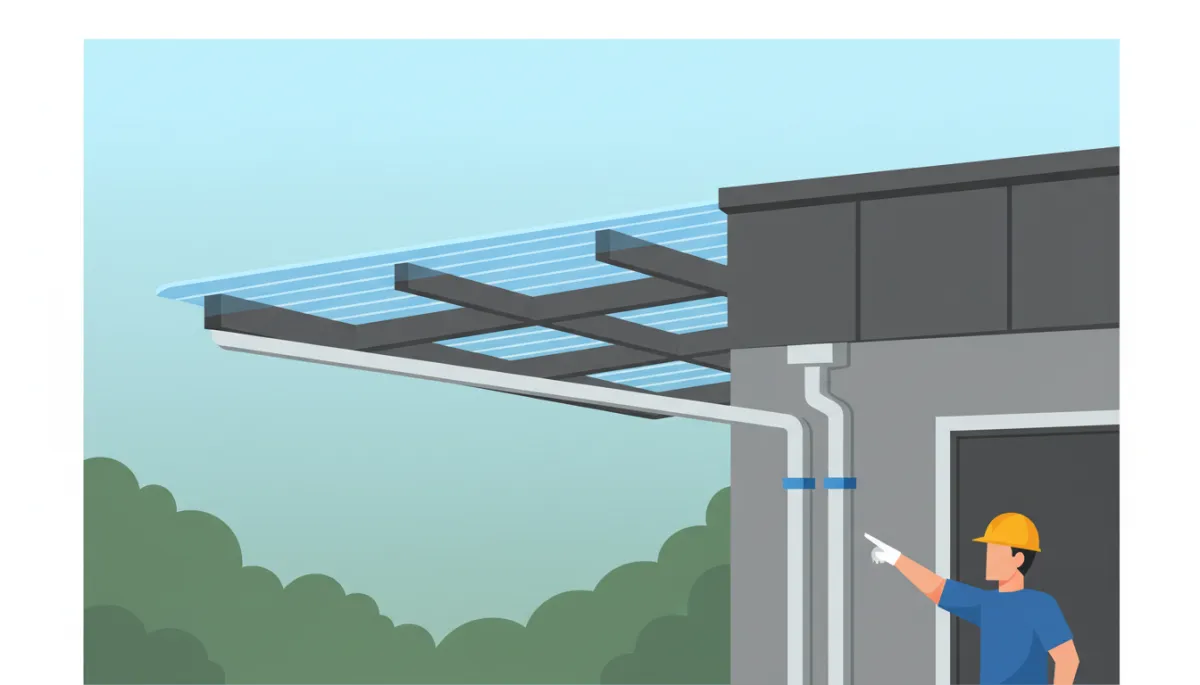
Thoughtful material choices and drainage details prevent small issues turning into costly leaks.
Question 4: How Will You Ensure Proper Waterproofing and Drainage?
In Singapore, most roof failures are really waterproofing failures. Even the best tiles, ACP, or polycarbonate roof panels will leak if joints and outlets are poorly detailed. Always ask:
What waterproofing system will you use? This might include membranes, flashing, sealants, or specialised tapes for polycarbonate and glass roof systems.
How are gutters and downpipes being improved? Oversized or additional outlets may be needed to cope with intense tropical storms.
How will you handle transitions? For example, where a tiled roof meets an ACP-clad wall, or where a pergola connects to the main building.
For awnings and pergolas, pay special attention to the connection line along the wall. This is a frequent leak point, especially when sealant is applied without proper backing or flashing. A professional contractor should be able to explain, in simple terms, how their detailing prevents water from sneaking behind the structure during wind-driven rain.
Question 5: What Is Included in Ongoing Roof Maintenance?
Roof maintenance is not just an upsell; it is essential in our climate. When discussing roof repair, ask your contractor to outline a simple maintenance plan so that minor issues are caught early. This might include:
Annual inspections of tiles, ridge caps, flashing, and gutters for landed homes.
Cleaning and checking joints on ACP cladding, polycarbonate roof panels, and glass roof systems to remove debris that traps moisture.
Visual checks of pergola and awning structures for rust, sagging, or loose fasteners, especially after strong storms.
Ask whether maintenance visits include photo documentation and a simple report. This gives you a record of how your roof is ageing and helps you budget for future upgrades, such as switching to FluteShield™ panels or adding a more robust waterproofing system before failure occurs.
Question 6: What Warranty and After-Sales Support Do You Provide?
A reputable roofing specialist in Singapore should stand behind both materials and workmanship. Before confirming any roof repair or replacement, clarify:
How long is the workmanship warranty? For example, one to two years for repairs, longer for full re-roofing.
Are there separate warranties for materials? Polycarbonate systems like FluteShield™ or certain glass roof coatings may come with manufacturer warranties against yellowing, cracking, or delamination.
What exactly is covered? For instance, does the warranty include leak tracing and rectification if water appears in the same location again?
Clear answers here protect you from unpleasant surprises later. If a contractor is vague about warranty terms, consider it a red flag, especially for more complex systems like ACP façades, glass roof atriums, or large pergola structures.
Question 7: How Will the Work Affect My Daily Life and Safety?
Roof repair can be noisy, dusty, and sometimes disruptive. In dense Singapore neighbourhoods, safety and cleanliness matter as much as the final result. Before work begins, ask:
How long will the project take? Get a realistic schedule for repairs, especially if scaffolding or lifting equipment is involved for ACP or glass roof work.
What safety measures are in place? This includes harnesses, barriers, and protection for your car, plants, and outdoor furniture under pergolas or awnings.
How will you protect my interior from dust and water? Important if ceiling boards are opened or if temporary coverings are needed while work is in progress.
A professional contractor should be able to walk you through the process step by step, so you know what to expect and can plan around noisy or messy phases of the project.
Bringing It All Together: Don’t Wait for the Next Storm
Roof repair in Singapore is not something to postpone until “after the rainy season” — by then, minor issues may already have turned into structural damage, mould, or electrical risks. Whether you are dealing with a simple awning leak, a foggy polycarbonate roof, or a more complex glass roof or ACP façade, the questions you ask today can save you thousands of dollars tomorrow.
Start by understanding the true cause of the problem, then weigh repair versus replacement based on material lifespan and performance in our climate. Insist on clear explanations of waterproofing, drainage, and maintenance, and choose materials — from traditional tiles to FluteShield™ panels or laminated glass — that are proven to handle Singapore’s heat and rain. Finally, make sure your contractor offers solid warranties and a safe, well-managed work process.
By asking these homeowner questions early, you turn roof repair from a stressful emergency into a planned investment that protects your home, your family, and your peace of mind for years to come.
