Why Some Roofs Are So Noisy During Rain in Singapore
When it rains in Singapore, the sound can be relaxing.
Soft rain on the roof? Nice. Heavy rain hammering above your balcony like someone is throwing coins from the sky? Not so nice.
Many homeowners focus on how a roof in Singapore looks, how much it costs, and whether it blocks rain. But one thing often gets ignored until it is too late: rain noise.
The type of roofing material, roof structure, roof slope, ceiling design, and installation method can all affect how loud your roof sounds during heavy rain.
If you are planning to install a roof for your home, understanding the differences of each material can help you choose a more comfortable roofing solution.
Why Some Roofs Sound Louder Than Others
Rain noise happens when raindrops hit the roof surface.
The harder the impact, the louder the sound. But the material is not the only reason. The structure underneath also plays a big part.
A roof may sound louder because of:
Thin roofing material
Hollow space underneath the roof
Poor support structure
Wide unsupported panels
Steep rain impact
Hard surface material
Lack of insulation
Poor installation workmanship
This is why two homes can use similar roofing materials but have very different rain noise levels. A good roof contractor in Singapore should understand how the full roofing system affects sound, not just how the roof looks from below.
Roof Thickness Can Affect Sound
Thicker roofing materials usually feel more stable and may reduce sharp impact sounds better than thin materials. This does not mean thicker is always automatically better, but material thickness can affect how the roof responds to rain impact.
For example, a very thin sheet may vibrate more when hit by heavy rain. That vibration can make the roof sound louder. The goal is not just to choose a roof that looks good. It should also feel good to live with.
Roof Structure Matters Too
A strong roof structure can help reduce unnecessary vibration.
If the roof panels are poorly supported, they may flex or shake more during rain and wind. This can make the roof sound louder and feel less stable.
A proper roof installation in Singapore should consider:
Support spacing
Frame strength
Panel fixing method
Roof span
Wind exposure
Drainage direction
Wall connection points
The roof panel is only one part of the system. The structure underneath does a lot of the quiet work, literally. This is why homeowners should not only ask, “What material is this roof?”
They should also ask, “How will this roof be installed?”
Hollow Spaces Can Make Rain Sound Louder
If there is an empty cavity between the roof panel and the ceiling, rain noise may become more noticeable. The sound can bounce around and feel louder from inside the home.
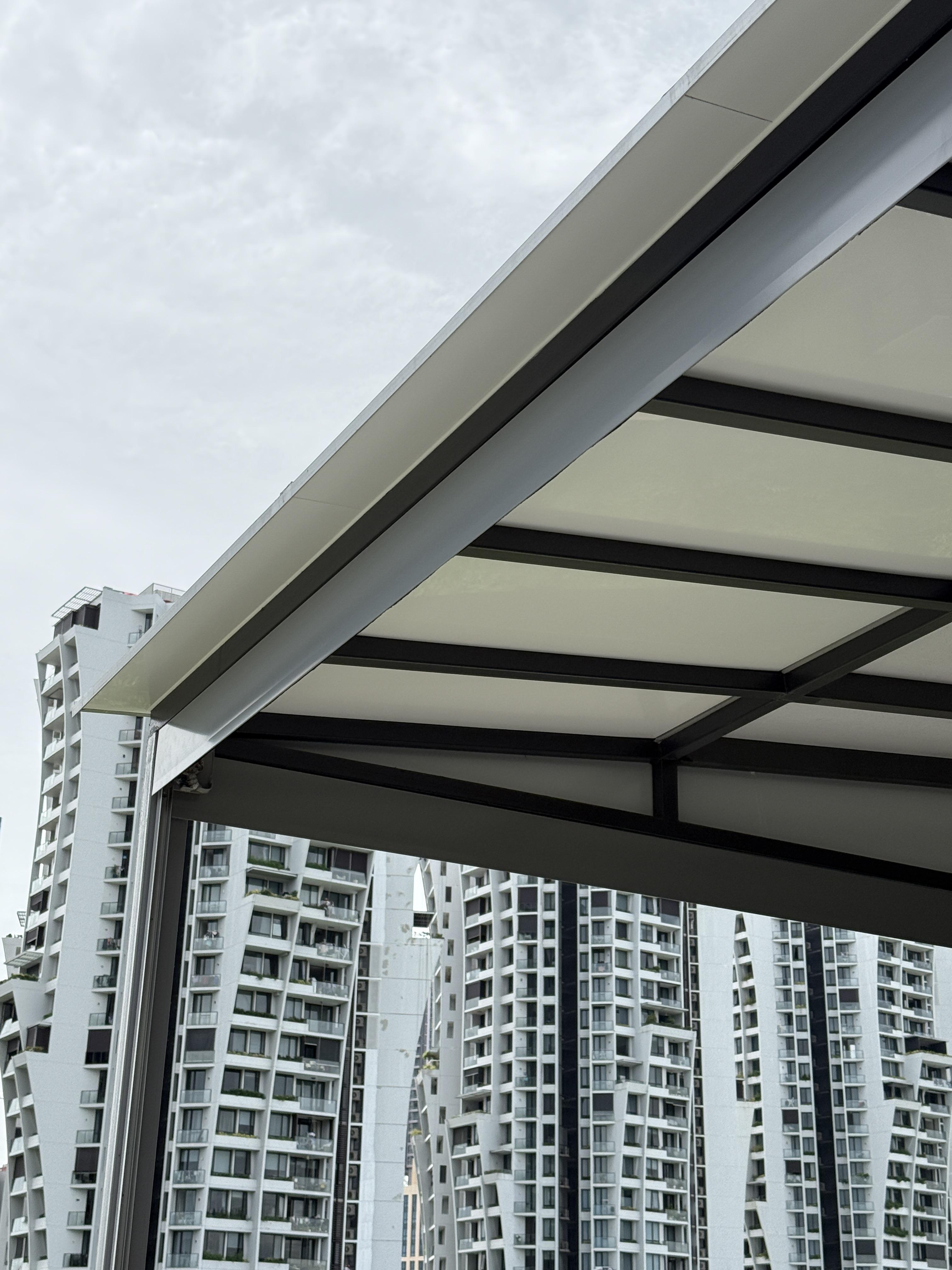
This is common when the roof is installed over semi-outdoor spaces like balconies, patios, terraces, and car porches.
For a more comfortable roofing solution in Singapore, homeowners may consider design options that reduce echo, depending on the space.
This may include better roof structure planning, ceiling treatment, or using suitable materials for the location.
How to Reduce Roof Rain Noise
You may not be able to remove rain noise completely, but good planning can reduce it.
To reduce rain noise, homeowners can consider:
1. Choose the right roofing material
A FluteShield™ Fluted panels may be more suitable for homeowners who want a solid, shaded, and modern roofing solution.
2. Avoid very thin materials
Thin roofing sheets may vibrate more and create sharper rain sounds.
3. Ensure proper structural support
A well-supported roof can reduce movement and vibration.
4. Consider insulation or ceiling treatment
Depending on the design, additional layers may help reduce noise.
5. Work with an experienced roof contractor
A reliable roof contractor in Singapore should understand material selection, structure, drainage, and long-term comfort.
What to Ask Before Installing a Roof in Singapore
Before installing a roof in Singapore, ask these questions:
1. Will this roof be noisy during heavy rain?
This is especially important if the roof is near bedrooms or work areas.
2. What roofing material is suitable for my space?
An Aluminium Composite Panel (ACP) roof may be better for shade and solid coverage. A polycarbonate roof may be better for natural light.
3. Is the roof properly supported?
Support structure affects noise, stability, and durability.
4. Is drainage planned properly?
Poor drainage can lead to overflow, water stains, and leaks.
5. Is the roof exposed to strong wind?
Wind can increase rain impact and cause more noise.
6. Is the contractor experienced with Singapore weather?
A proper roof contractor in Singapore should understand heavy rain, humidity, heat, and wind-driven rain.
Conclusion
Rain noise is an important factor when choosing a roof in Singapore, but many homeowners only think about it after installation.
The final sound level depends not only on the roofing material, but also on roof thickness, structure, slope, support, installation quality, and whether the roof is near quiet indoor spaces.
A good roofing solution in Singapore should protect your home from rain, reduce heat, manage drainage, and keep the outdoor area comfortable during bad weather.
