Causes of Roof Leakage in Singapore’s Climate
Roof leakage is one of the most frustrating problems for homeowners in Singapore because it usually appears at the worst possible time: during heavy rain, when water starts dripping, stains begin forming, and the outdoor area suddenly becomes difficult to use.
The tricky part is that a roof leak is not always caused by the roofing panel itself. Water can enter through wall joints, overflow from drainage points, travel along structures, or come in from the side during wind-driven rain. This is why proper inspection matters before deciding whether the issue needs a simple repair, a larger rectification, or a full replacement.
For homeowners searching for roof leak repair in Singapore, understanding the common causes of leakage can help them ask better questions, avoid unnecessary work, and choose a contractor who can diagnose the issue properly instead of applying a temporary patch.
Poor Sealing at Wall Connections
One of the most common leakage points is where the roof connects to the existing wall. This area is exposed to rainwater, heat, humidity, and daily expansion and contraction, so it needs to be sealed and finished properly.
If the sealant is poorly applied, worn out, cracked, or not suitable for outdoor use, water may slowly enter through the connection point. At first, the issue may only appear as a small stain or occasional drip during heavy rain. Over time, however, it can become more obvious and may affect the wall, ceiling, or flooring below.
This is why a proper roofing contractor in Singapore should not only look at the roof panel when checking for leakage. The wall connection, flashing, sealant line, and surrounding structure should also be inspected carefully.
Blocked or Poorly Planned Drainage
A roof does not only need to block rain. It also needs to guide water away properly.
In Singapore, rain can be sudden and heavy, so drainage plays a major role in preventing leakage. If gutters are too small, blocked by leaves, poorly positioned, or unable to handle the water flow, rainwater may overflow and enter areas where it should not.
Sometimes homeowners assume the roof is leaking, when the actual issue comes from overflowing gutters or water discharging in the wrong direction. This is especially common for balconies, patios, car porches, and outdoor extensions where water has limited places to drain.
A good inspection should check the roof slope, gutter condition, downpipe location, and water flow direction before deciding what repair is needed.
Incorrect Roof Slope
The slope of the roof affects how quickly rainwater moves away from the surface. If the roof is too flat, water may collect instead of flowing smoothly into the gutter or drainage point.
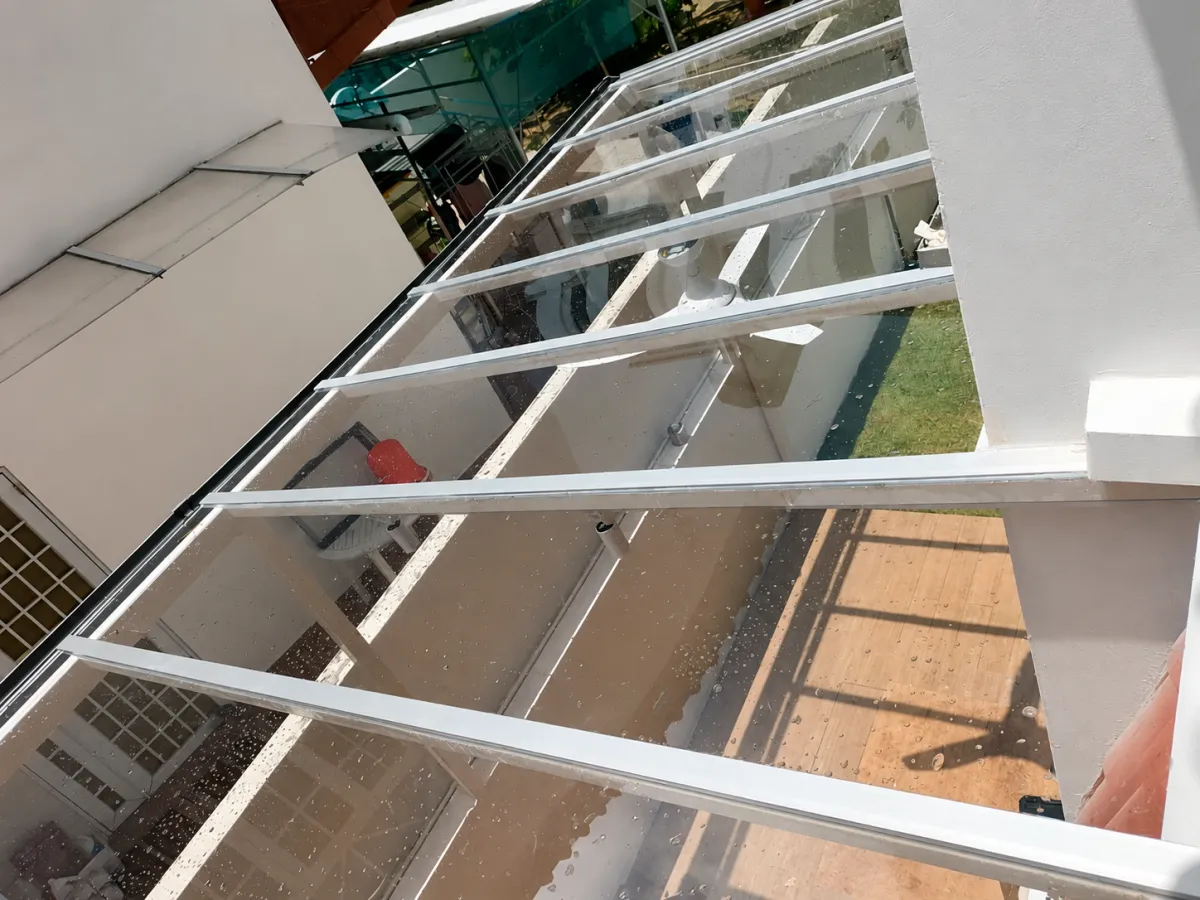
Over time, standing water can increase the risk of staining, algae growth, sealant wear, and leakage. This can affect different roofing systems, including Aluminium Composite Panel (ACP), Polycarbonate roof, Glass roof, FluteShield™, Pergola, or Awning installations if the water flow is not properly planned.
A roof may look neat from below, but if the slope does not allow water to move correctly, problems may only appear during heavy rain. That is why leakage repair should always include checking whether the existing slope is suitable.
Aging Sealant and Worn Joints
Even when a roof is properly installed, outdoor sealant and joints are still exposed to Singapore’s heat, humidity, and rain over time. Constant weather exposure can cause some materials to harden, shrink, crack, or lose adhesion.
This does not always mean the entire roof has failed. In some cases, the roofing panel may still be in good condition, while the issue is limited to old sealant or worn joints.
For homeowners, this is important because the right solution may be targeted rectification rather than full replacement. A contractor should be able to explain whether the issue is localised or whether it indicates a larger problem with the system.
Rust or Weakness in the Supporting Structure
Leakage is not always about the top surface. Sometimes, the issue starts from the structure underneath.
If the supporting frame begins to rust, shift, or weaken, it may affect the alignment of the roofing panels and connection points. Once the structure moves out of alignment, gaps can form and water may find its way through.
This is why the frame material matters. A proper galvanised steel structure can offer better resistance against corrosion compared with untreated steel, which is especially important in Singapore’s humid and rainy environment.
During a leakage inspection, homeowners should ask whether the structure is still stable and whether the issue is only on the surface or connected to the frame beneath it. Repairing the visible leak without checking the structure may only solve the problem temporarily.
Cracked or Damaged Roofing Panels
Some leaks happen because the roofing material itself has become damaged. Panels may crack, warp, loosen, or become brittle after years of exposure, especially if the material quality is poor or the roof has gone through long-term sun and rain without proper maintenance.
This can happen to older roofing systems, including clear roofing materials, older polycarbonate roof installations, or panels that were not suited to the level of exposure in that location.
When the panel is the issue, repair may still be possible if the damage is limited to one section. However, if the damage is widespread or multiple panels are affected, replacement may be more practical than repeated patching.
Wind-Driven Rain Mistaken
Not every wet area means leaking.
In Singapore, rain often comes with wind, especially during heavy storms. This can push water into balconies, patios, terraces, and semi-outdoor spaces from the side. When this happens, homeowners may assume the roof is leaking, even though the water is actually entering through the open front or side.
This is where proper diagnosis matters. If the issue is side rain, adding more sealant or replacing the roof panel may not solve the problem. The space may need side protection instead.
For example, ZipBlind® can be paired with roofing to help reduce wind-driven rain, side glare, and privacy concerns where the site condition is suitable. The key is to identify the direction of water entry before deciding on the solution.
Poor Workmanship During Installation
A roof can use good materials and still leak if the installation is poorly handled.
Common workmanship issues include uneven panel alignment, weak wall connections, poor sealant work, insufficient overlap, badly positioned fasteners, and drainage details that were not properly planned. These issues may not be obvious immediately after installation, especially during dry weather.
The real test usually comes during heavy rain. That is when homeowners may notice dripping, overflow, stains, or water entering through unexpected areas.
This is why choosing the right contractor matters. A proper roofing contractor in Singapore should understand not only the material, but also the site condition, water flow, structure, finishing, and after-service process.
Lack of Maintenance
Many homeowners only check their roof when something goes wrong, but small maintenance issues can slowly become leakage problems.
Leaves, dirt, algae, loose fasteners, worn sealant, and blocked gutters can affect water flow and cause water to build up in areas that were not designed to hold it. Over time, this can lead to stains and leakage.
Maintenance does not mean homeowners need to inspect everything every week, but it is sensible to check the roof after periods of heavy rain or if visible stains, overflow, or unusual dripping appear.
Conclusion
Roof leakage in Singapore is often caused by more than one factor. Heavy rain, humidity, wind-driven rain, aging sealant, poor drainage, weak structure, damaged panels, and workmanship issues can all contribute to water entering the home or outdoor space.
That is why homeowners should avoid guessing the cause based only on where the water appears. A proper inspection should identify whether the issue comes from the roof panel, wall connection, drainage, structure, or side exposure.
For homeowners looking for roof leak repair in Singapore, the smartest first step is not simply asking how much the repair costs. It is asking what caused the leak in the first place.
