
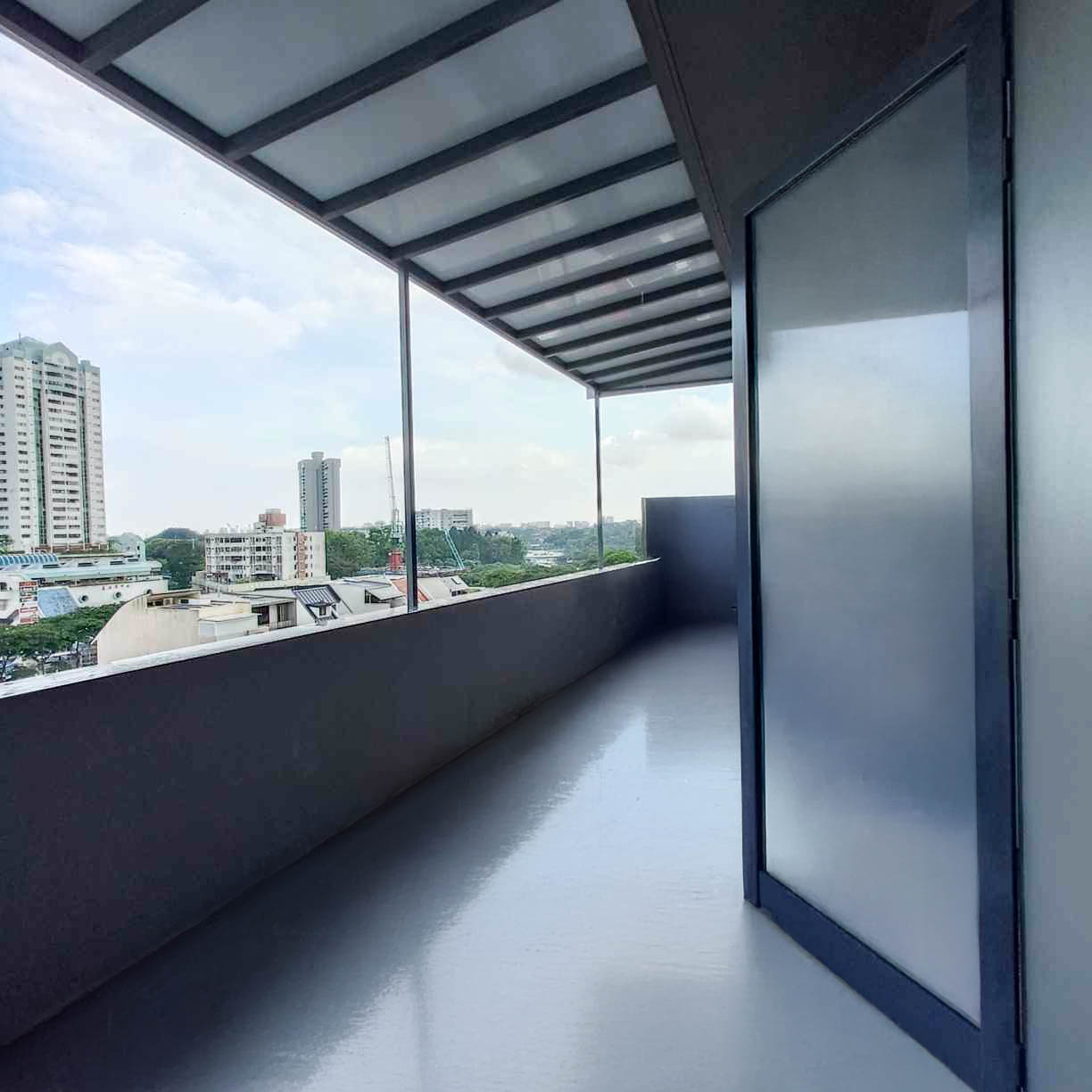
Why Your Outdoor Space Still Gets Wet Even After Installing a Roof in Singapore
Why Your Outdoor Space Still Gets Wet Even After Installing a Roof in Singapore
Installing a roof in Singapore sounds like the obvious way to protect your balcony, patio, terrace, or car porch from rain. After all, if there is a roof above your head, the space should stay dry, right?
Not always.
Many homeowners install a balcony roof, patio roof, polycarbonate roof, or Aluminium Composite Panel (ACP) roof, only to realise that rainwater still enters the area during heavy storms. This can be frustrating, especially when the goal was to create a more usable outdoor space.
The truth is simple: a roof protects the top, but rain in Singapore does not always fall straight down. With strong wind, heavy rain, and poor drainage, water can still enter from the sides, edges, or gaps.
Here is why your outdoor space may still get wet even after installing a roof, and what you can do about it.
1. Singapore Rain Often Comes in at an Angle
Singapore's weather is not polite. During heavy rain, wind can push water into your balcony, patio, or terrace from the sides.
This is known as wind-driven rain.
Even with a properly installed roof extension, your outdoor area can still get wet if the rain blows in from the front or side. This is especially common in high-rise condos, open balconies, landed homes, and outdoor areas with wide exposed openings.
A roof blocks rain from above, but it does not fully block rain from the sides.
This is why many homeowners pair a roof in Singapore with outdoor blinds, ZipBlind® , or side screens to create better rain protection.
2. The Roof May Not Be Extended Far Enough
If the balcony roof or patio roof is too short, rainwater can still land near the edge and splash into the space. This is common when homeowners choose a smaller roof extension to save cost or to keep the design less bulky.
Before installing any outdoor roof in Singapore, homeowners should consider:
How far the roof extends and the area it covers
Where the rain usually enters
Whether the area faces strong wind
Whether the roof covers the usable area properly
Whether additional side protection is needed
3. Poor Drainage Can Cause Water Overflow
A roof is only one part of the system. Drainage is just as important.
If the gutter is too small, blocked, badly positioned, or missing completely, rainwater may overflow and splash into your outdoor area. This can make homeowners think the roof is leaking when the real problem is water overflow.
For any roofing project in Singapore, drainage should be planned properly from the start.
A proper roofing system should consider:
Gutter system
Gradient roof slope for rain water to flow
Downpipe location
Rainwater discharge point
Maintenance access
A beautiful roof with bad drainage is like buying an expensive umbrella with holes. Engaging an expert roof contractor is important to rule these out.
4. Side Gaps Can Let Rain Enter
Roofs are a great addition to block out rain and extend your space, however a roof alone is not enough to shield yourself from heavy downpours.
Small gaps may not seem like a big issue during light rain. But during heavy rain, water can be pushed through these openings and enter the sheltered area.
This is why a professional roof contractor in Singapore should check the full site condition before recommending a solution.
The contractor should look at:
Wall connection points
Side openings
Roof structure design and size
Existing structures
Possible water entry points
The goal is not just to install a roof. The goal is to reduce water entry based on how the space actually behaves during rain.
5. Outdoor Blinds Can Help With Side Rain
If your outdoor space gets wet from the sides, a roof alone may not be enough.
This is where outdoor blinds or ZipBlind® can help.
A roof protects the top. Outdoor blinds help reduce rain, wind, glare, and privacy issues from the sides. When both are used together, the outdoor area becomes much more usable.
This combination is especially useful for:
Condo balconies
Landed patios
Terraces
Car porches
Backyard
Sideyard
Outdoor dining areas
Garden seating areas
Semi-outdoor family spaces
For homeowners in Singapore who want to use their balcony or patio more often, combining roofing with ZipBlind® is the perfect combination to enclose the area with zero disruptions no matter rain or shine.
Is approval needed?
Depending on the property type, homeowners may need to check with the relevant authority, MCST, or management before installing a fixed roof structure.
6. When Should You Speak to a Roof Contractor?
You should speak to a professional roof contractor in Singapore if your outdoor space has any of these problems:
Rain enters from the side
The balcony still gets wet
The roof feels too hot
Water overflows from the gutter
The current roof looks old or stained
The outdoor area is not comfortable to use
You are unsure whether to choose what kind of roofing
A proper contractor should not only ask, “What material do you want?”
They should ask how you use the space, where the rain enters, how much sun the area receives, and what kind of comfort level you expect.
That is the difference between selling a roof and solving a problem.
Conclusion
If your outdoor space still gets wet after installing a roof, it does not always mean the roof has failed. In many cases, the issue comes from wind-driven rain, short roof coverage, poor drainage, side gaps, or unsuitable design.
A roof in Singapore needs to handle more than just vertical rain. It needs to deal with heavy storms, strong wind, heat, humidity, and real-life usage.
For homeowners who want to make their balcony, patio, terrace, or car porch more usable, the best solution may be a combination of roofing, drainage planning, and side protection.
We “Roofing Solutions” can help assess your space and recommend a suitable roofing solution based on your home layout, rain exposure, sun direction, and daily usage needs.
