
Singapore Roofing Trends & Innovations: What Homeowners Are Looking For Today
Roofing in Singapore is no longer just about covering an outdoor area from rain.
For many homeowners, the question has changed from “Can I install a roof here?” to “Can this outdoor space become something I will actually use every day?”
That change matters because balconies, patios, terraces, car porches, and garden corners are no longer seen as leftover spaces. They are becoming part of the home’s lifestyle, comfort, and overall design. A homeowner may want a cooler dining area, a brighter walkway, a more private balcony, a premium-looking car porch, or a flexible outdoor area that can adapt to different weather conditions.
This is where newer roofing trends and innovations in Singapore come in. Instead of choosing one standard roof for every space, homeowners are now looking at better material selection, cleaner finishing, stronger structures, flexible systems, and solutions that work together as a complete outdoor setup.
Outdoor Spaces Are Being Treated More Like Rooms
One of the biggest trends in Singapore homes is the shift from “shelter” to “usable outdoor living”.
In the past, many homeowners installed roofing mainly to stop rain from entering a balcony, car porch, or patio. Today, the expectation is higher. Homeowners want the space to look intentional, feel comfortable, and match the rest of the home.
A patio is no longer just a tiled area outside the house. It can become an outdoor dining zone, a family corner, a plant area, or a place to host guests. A balcony is no longer only for laundry or storage. It can become a reading corner, pet area, mini lounge, or work-from-home space.
This is why the planning has become more detailed. Homeowners are thinking about sunlight, privacy, airflow, furniture placement, rain direction, and how the space looks from both inside and outside the home.
A roof that only covers the top may not be enough if the space still feels hot, glaring, exposed, or disconnected from the interior design.
Flexible Outdoor Systems Are Getting More Attention
Not every homeowner wants permanent shade all day, and not every space needs to be fully covered throughout the year.
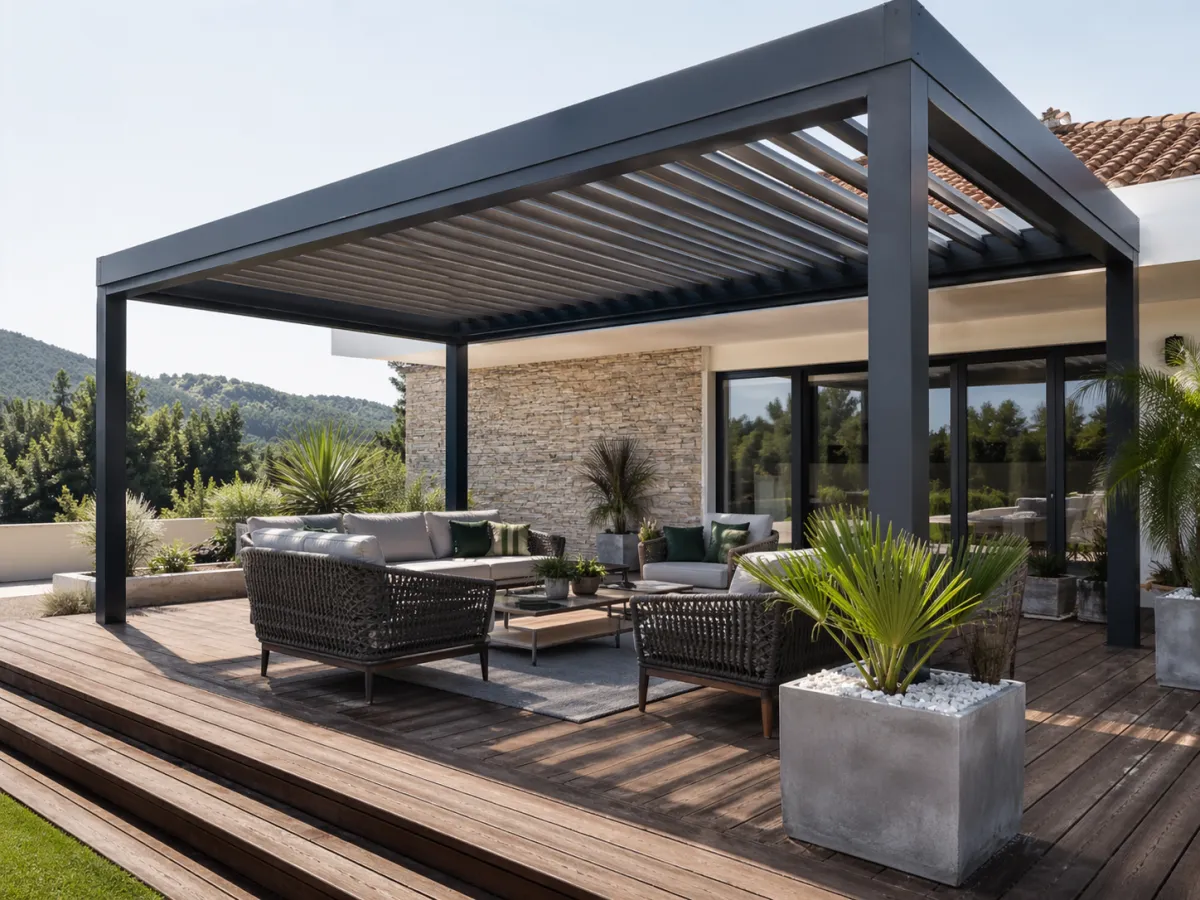
This is why flexible systems such as a Pergola or Awning are becoming more relevant for certain homes. A Pergola can help define an outdoor lifestyle area while giving homeowners more control over light and shade, especially when adjustable louvres are used. An Awning can be useful for smaller areas where homeowners want shade or rain protection only when needed.
This flexibility is appealing because Singapore weather changes quickly. A space may need sunlight in the morning, shade in the afternoon, and shelter when it rains. Instead of treating the outdoor area as a fixed condition, homeowners are starting to prefer systems that allow the space to respond to different times of the day.
Premium Finishing Is Becoming a Bigger Priority
Homeowners are also becoming more sensitive to how the completed installation looks.
It is no longer enough for the roof to be functional if the finishing looks messy, the structure feels bulky, or the underside looks like an afterthought. This is especially true for visible areas such as car porches, patios, balconies, and front-facing extensions.
A clean roof line, neat joints, matching colours, hidden or well-managed drainage, and proper underside finishing can change how the whole home feels. For design-focused homeowners, options such as Wooden Cladding Aluminium can help create a warmer and more finished appearance without relying on natural timber that may require heavier maintenance outdoors.
This is an important trend because many homeowners are no longer separating function from design. They want a roofing solution that works in Singapore weather, but they also want it to look like it belongs to the home.
A badly finished roof can make even a good material look cheap. A well-finished installation can make the outdoor area feel like a natural extension of the house.
Stronger Structures and Better Material
As homeowners become more informed, more attention is being placed on what sits beneath the visible roof surface.
The material on top matters, but the supporting structure, drainage plan, wall connection, and installation workmanship play a major role in how the system performs over time. This is why details such as a galvanised steel structure, proper support points, roof slope, and clean sealing are becoming more important in homeowner discussions.
Singapore’s climate is tough on outdoor structures. Heat, humidity, rain, and wind can expose weak points that may not be obvious on installation day. A roofing system that looks fine at handover may perform very differently after months or years of weather exposure if the hidden structure was not properly planned.
This is why more homeowners are beginning to ask better questions before confirming a contractor. They want to know what material is being used, how the structure will be supported, where the water will flow, and what kind of after-sales support is available if something needs attention later.
Glass Roofs Are Being Used for Light and Visual Openness
A Glass roof appeals to homeowners who want shelter without making the space feel closed in.
This is especially relevant for areas beside living rooms, courtyards, garden-facing spaces, or patios where natural light is part of the design. A solid roof may provide shade, but it can also make some connected indoor areas feel darker if the layout is not planned properly.
The appeal of a Glass roof is its ability to keep the space visually open while still creating a more sheltered environment. However, homeowners are also becoming more practical about where it should be used.
A Glass roof should be planned with sun direction, glare, heat, maintenance access, and side protection in mind. In some homes, it may work beautifully on its own. In others, it may need to be paired with ZipBlind® or other shading solutions to keep the space comfortable during harsh afternoon sun.
The trend is not simply about using glass because it looks premium. It is about using it in the right location so that the space remains bright without becoming uncomfortable.
FluteShield™ Reflects the Move Towards Comfort-Focused Roofing
Another innovation trend is the move towards roofing systems that focus on comfort, not just shelter.
FluteShield™ is relevant here because it is positioned for homeowners who want a more solid and comfort-driven roofing option. Its PU foam core creates a thicker panel profile, which can help reduce rain noise and improve comfort during hot weather.
This matters because rain noise and heat are two issues homeowners often underestimate before installation. A roof can protect the area from rain, but if the sound becomes disruptive during every downpour, or if the space still feels hot during the afternoon, the outdoor area may not be used as often as expected.
For family areas, patios, and semi-outdoor spaces where people may sit, dine, or relax, comfort-focused materials can make a real difference to the way the space is experienced.
One-Stop Outdoor Planning Is Becoming More Useful
When different vendors handle different parts of the outdoor space, problems can happen at the connection points.
One contractor may install the roof. Another may install ZipBlind®. Another may handle lights or finishing. When an issue appears later, each party may point to another part of the system.
This is why one-stop outdoor planning is becoming more attractive to homeowners.
A coordinated approach helps ensure the roof, side protection, drainage, structure, finishing, and future upgrades are planned together. It also gives homeowners a clearer point of contact if questions or after-sales issues arise later.
For homeowners who want a more complete outdoor space, the convenience is not only about reducing the number of vendors. It is about reducing the chance of miscommunication between different parts of the project.
The Future of Roofing in Singapore Is More Personalised
The most important trend is that homeowners are moving away from one-size-fits-all solutions.
A car porch does not need the same solution as a balcony. A west-facing patio does not need the same setup as a shaded walkway. A family dining area does not need the same shelter as a service yard.
This is why the future of roofing in Singapore is likely to be more personalised.
The right solution may be Aluminium Composite Panel (ACP) for strong shade, a Glass roof for natural light, FluteShield™ for comfort, a Pergola for flexible outdoor living, an Awning for targeted coverage, Wooden Cladding Aluminium for finishing, or ZipBlind® for side protection.
In many cases, the best answer may be a combination rather than a single product.
The homeowner’s lifestyle, home layout, weather exposure, design preference, and long-term plans should all shape the recommendation.
Conclusion
Singapore roofing trends are moving beyond basic shelter.
Homeowners are now looking for outdoor spaces that feel usable, comfortable, flexible, well-designed, and suitable for long-term living. They are paying more attention to heat, glare, wind-driven rain, privacy, finishing, structural quality, and after-sales support.
This is why modern roofing solutions in Singapore are no longer just about installing a panel overhead. They are about creating outdoor areas that work with the home and with the way people actually live.
Whether the solution involves Aluminium Composite Panel (ACP), polycarbonate roof, Glass roof, FluteShield™, Pergola, Awning, Wooden Cladding Aluminium, ZipBlind®, or a complete outdoor setup, the goal is the same.
The outdoor space should not only be covered.
It should be worth using.
