DIY Reroofing in Singapore: Risks & How It Works
Singapore Roofing, Roof Maintenance, Home Improvement, DIY Reroofing, Polycarbonate Roof, Aluminium Composite Panel (ACP), Glass Roof, FluteShield™, Awning, Pergola
DIY Reroofing in Singapore: How It Works and What Are the Risks?
Thinking about DIY reroofing to save money on your Singapore roofing project? Before you climb that ladder, it is crucial to understand how reroofing actually works here, and the very real risks involved for homeowners.
Why Homeowners Consider DIY Reroofing in Singapore
In a city where living costs are high, it is no surprise that many people turn to home improvement projects to cut expenses. For landed property owners and those managing small private buildings, DIY reroofing can look like an attractive way to save on labour and contractor fees. Online tutorials make the work appear straightforward, and hardware stores in Singapore are well stocked with roofing tools, sealants, and replacement tiles or metal sheets, as well as modern options like polycarbonate roof panels, Aluminium Composite Panel (ACP), glass roof systems, FluteShield™ skylight panels, awning kits, and pergola structures for outdoor spaces.
However, Singapore roofing is not quite the same as reroofing in a temperate climate. Our hot, humid weather, frequent heavy rain, and strong winds place unique demands on roofs, including lightweight polycarbonate roof shelters, ACP façades, and glass roof canopies commonly used over car porches, balconies, and pergola or awning areas. Mistakes in installation or roof maintenance can quickly lead to leaks, mould growth, damaged ceilings, and even structural problems. Understanding how reroofing works in this local context is essential before you decide whether to take the DIY route or call a professional roofing contractor.
What Is Reroofing, Exactly?
Reroofing is more than just replacing a few broken tiles. It generally refers to renewing the outer protective layer of your roof, and sometimes the underlying structure as well. In Singapore, common residential roofing systems include clay or concrete roof tiles, metal roofs, polycarbonate roof shelters, Aluminium Composite Panel (ACP), glass roof skylights, FluteShield™ panels, and waterproofing membranes on flat roofs or roof terraces. A reroofing project might involve:
Stripping off old roof tiles, metal sheets, polycarbonate roof panels, ACP, glass canopies, or membrane layers
Inspecting and repairing the timber or metal roof structure beneath, including any framing that supports awnings or pergola roofs
Installing new underlayment or waterproofing systems suited to tile, metal, ACP, glass roof, or FluteShield™ assemblies
Laying new tiles or metal roofing sheets, or fixing polycarbonate roof sheets, ACP panels, and glass roof modules with proper alignment and fastening
Because a roof is your home’s first line of defence against the elements, reroofing must be done correctly to ensure long‑term protection. Poorly executed DIY reroofing can compromise the entire building envelope, including attached awnings, pergola roofs, and polycarbonate roof shelters, making future repairs more costly than hiring a professional in the first place.
How DIY Reroofing Works: Step‑by‑Step Overview
If you are still considering tackling your own Singapore roofing project, it helps to break down the process. The exact steps vary depending on whether you have a tiled, metal, polycarbonate roof, ACP, glass roof, FluteShield™ skylight, or flat roof, but the general flow is similar.
1. Inspection and Planning
Any good roof maintenance or reroofing job starts with a thorough inspection. You need to identify:
Areas with cracked, loose, or missing tiles or panels, including brittle polycarbonate roof sheets or delaminated ACP panels
Signs of water damage on ceilings and attic spaces, or around glass roof skylights, FluteShield™ panels, awnings, and pergola junctions
Rusted metal components, sagging rafters, or deteriorated battens
At this stage, a DIYer must also check whether any approvals are needed. For many landed homes, minor repairs may not require planning permission, but major reroofing works or visible additions such as large polycarbonate roof shelters, ACP façades, glass roof extensions, FluteShield™ skylights, awnings, or pergola roofs can sometimes fall under building regulations. When in doubt, consult the relevant authorities or a professional Singapore roofing specialist before starting.
2. Sourcing Materials and Tools
Once you have a clear plan, you will need to purchase roofing materials that match or improve on your existing system. This might include:
New tiles or metal sheets suitable for Singapore’s climate
Polycarbonate roof panels or FluteShield™ sheets for car porch shelters, balcony covers, or pergola roofs
Aluminium Composite Panel (ACP) boards for eaves, façades, or lightweight roof
Laminated or tempered glass roof panels for skylights, corridors, or awning canopies
Underlayment, waterproofing membranes, or insulation boards
Screws, nails, sealants, flashing, and ridge caps suitable for tile, metal, ACP, polycarbonate roof, and glass roof systems
Essential tools for DIY reroofing include ladders or scaffolding, safety harnesses, gloves, non‑slip footwear, cutting tools, drills, and measuring equipment. Many homeowners underestimate this part of home improvement; by the time you buy or rent everything you need, especially specialised blades for polycarbonate roof sheets or drilling bits for glass roof fittings and ACP panels, the cost savings compared to hiring a contractor may not be as large as expected.
3. Removing the Old Roof Covering
Stripping off old materials is physically demanding and potentially dangerous. Tiles are heavy, edges can be sharp, and debris can slide down the slope quickly. Brittle polycarbonate roof sheets can shatter, and large glass roof panels or ACP boards are awkward to handle at height. In Singapore’s heat, working on a roof for hours can lead to dehydration and fatigue, increasing the risk of accidents. Careful staging of the work area, including debris chutes or tarpaulins to protect lower levels, is vital for safety and cleanliness.
4. Inspecting and Repairing the Roof Structure
Once the surface layer is removed, you will see the true condition of the roof structure. Rotten timber, rusted purlins, or misaligned rafters must be repaired or replaced before installing new coverings. This is where DIYers often run into trouble. Structural work requires experience and an understanding of load paths, especially in a tropical environment where roofs must endure both heavy rain and occasional strong winds. This is equally important for lightweight structures that carry polycarbonate roof sheets, FluteShield™ skylights, ACP façades, glass roof panels, awnings, and pergola frameworks attached to the main building.
5. Installing Underlayment and Waterproofing
A key part of roof maintenance in Singapore is ensuring excellent waterproofing. Underlayment or membranes are laid over the structure to act as a secondary barrier against water ingress. Overlaps, joints, and penetrations around pipes or skylights must be sealed meticulously. This applies not only to tiled and metal roofs, but also to glass roof junctions, ACP cappings, and the interfaces where polycarbonate roof or FluteShield™ panels meet walls and beams on awnings and pergola structures. A small gap or poorly sealed joint may not leak immediately, but after months of intense sun and sudden downpours, the failure will show up as stains, peeling paint, and mould inside your home.
6. Laying the New Roof Covering
Finally, the new tiles or metal sheets are installed according to the manufacturer’s guidelines. Correct alignment, overlap, and fastening are crucial. On tile roofs, for example, improper spacing can allow wind‑driven rain to penetrate or cause tiles to lift during storms. For metal roofs, incorrect screw placement or overtightening can lead to premature rusting and leaks. For polycarbonate roof and FluteShield™ systems, you must allow for thermal expansion and use the right profiles and fasteners; for ACP and glass roof assemblies, the detailing of joints and support brackets is critical. This is where the experience of a seasoned Singapore roofing professional really shows, whether they are dealing with a traditional pitched roof or a modern awning or pergola design.
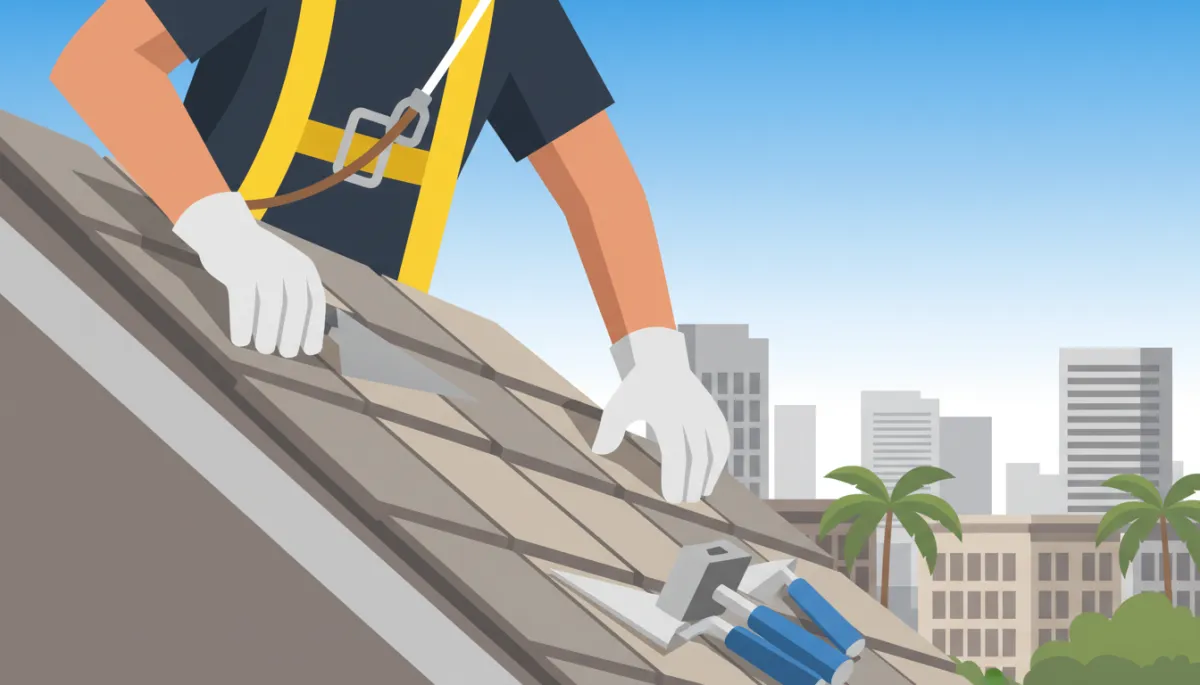
Correct tile alignment and fastening are critical to prevent leaks in heavy tropical rain.
The Hidden Risks of DIY Reroofing in Singapore
On paper, DIY reroofing may look like a straightforward home improvement project. In reality, there are serious risks that every homeowner should weigh carefully before deciding to do it themselves. These risks are not just about workmanship; they also involve safety, legal responsibilities, and long‑term financial impact, whether you are dealing with a traditional tiled roof or modern additions such as a polycarbonate roof, ACP façade, glass roof canopy, FluteShield™ skylight, awning, or pergola.
1. Safety Hazards and Risk of Injury
Working at height is always dangerous, even for professionals. Roof slopes can be steep, surfaces may be slippery with moss or morning dew, and sudden showers are common in Singapore. A fall from a single‑storey roof can cause serious injury; from a two‑ or three‑storey building, it can be fatal. DIY enthusiasts often lack proper fall‑arrest systems, edge protection, and training in safe work practices. This danger also applies when installing or replacing polycarbonate roof shelters, glass roof skylights, and high awnings or pergola structures. No cost savings are worth a trip to the hospital or worse.
⚠️ Warning: If you feel even slightly unsure about your ability to work safely at height, do not attempt DIY reroofing, whether on tiles, polycarbonate roof panels, ACP, or a glass roof. Engage a licensed Singapore roofing contractor instead.
2. Waterproofing Failures and Persistent Leaks
One of the most common consequences of poorly executed DIY reroofing is chronic leaking. Because Singapore experiences intense, wind‑driven rain, even small gaps or misaligned tiles can allow water to enter. The damage is often hidden at first, soaking insulation, ceiling boards, and timber members before becoming visible. The same is true for polycarbonate roof joints, ACP cappings, glass roof framing, and FluteShield™ skylight connections on awnings and pergola roofs. By the time you notice water marks or peeling paint, the repair cost has escalated significantly. A professional roofer understands how local weather patterns affect roofs and will design and install systems that can withstand them.
3. Structural Damage and Compromised Roof Integrity
Another significant risk is unintentionally weakening the roof structure. Removing or cutting structural members without understanding their role can cause sagging or even partial collapse over time. Overloading the roof with heavier materials than it was designed for can have a similar effect. For example, replacing a lightweight polycarbonate roof shelter with a heavier glass roof or thick ACP system without checking load capacity can be dangerous. In older Singapore homes, timber structures may already be weakened by age or termites; DIY reroofing without a proper structural assessment could make matters worse rather than better, especially when adding awnings or pergola roofs that tie into existing beams.
4. Voided Warranties and Insurance Complications
Many modern roofing products come with manufacturer warranties that require installation by trained or certified professionals. When you undertake DIY reroofing, you may unknowingly void these warranties. This is particularly relevant for branded systems such as FluteShield™ skylights, proprietary polycarbonate roof profiles, ACP panels, and engineered glass roof assemblies used on awnings and pergola structures. In the event of a failure, you would have to bear the full cost of replacement. Similarly, some home insurance policies may take issue with non‑professional roofing work, especially if it leads directly to water damage or structural issues. It is wise to check your policy terms and discuss planned works with your insurer before you begin.
5. Compliance with Local Regulations
While minor roof maintenance is usually straightforward, larger reroofing projects may have to comply with building codes or estate guidelines, particularly in conservation areas or strata‑titled developments. An unapproved change in roof colour, profile, or height can lead to disputes with neighbours or management councils. The same applies to highly visible additions such as a new polycarbonate roof car porch shelter, ACP façade, glass roof corridor, FluteShield™ skylight, awning, or pergola that alters the external appearance of your property. Professional Singapore roofing contractors are typically familiar with such requirements and can advise you on what is permissible before work starts.
6. Higher Long‑Term Costs from Mistakes
Perhaps the most frustrating risk of DIY reroofing is spending time and money on a project, only to pay more later to fix mistakes. If a roof has to be re‑done, contractors may charge extra to remove incorrectly installed materials and repair hidden damage. This is especially true for complex systems like glass roof skylights, ACP façades, polycarbonate roof shelters, and FluteShield™ panels on awnings and pergola structures, where poor detailing can be time‑consuming to rectify. When you factor in the cost of tools, safety gear, and your own time, the initial savings can quickly disappear. In many cases, engaging a reputable roofing company from the start is more economical over the lifespan of your roof.
When DIY Reroofing Might Be Reasonable – And When It Is Not
Not every roofing task demands a full crew of professionals. For handy homeowners, there are situations where a limited DIY approach to roof maintenance can make sense, as long as you stay within safe and sensible boundaries. This applies both to the main roof and to smaller elements like a polycarbonate roof shelter, a simple metal awning, or a basic timber pergola.
Suitable DIY Tasks for Homeowners
Visual inspections from the ground or a secure balcony using binoculars
Clearing leaves and debris from gutters using stable ladders and safety gear, and gently cleaning dirt from polycarbonate roof or FluteShield™ panels on awnings and pergola covers
Replacing a small number of easily accessible tiles on a low, gently sloped roof, or swapping out a cracked polycarbonate roof sheet on a low‑level awning, if you have prior experience
These tasks support good home improvement practices and can extend the life of your roof without exposing you to excessive risk. For anything beyond minor repairs, however, it is usually wiser to call a professional Singapore roofing contractor, especially when dealing with structural work, ACP, glass roof skylights, FluteShield™ systems, or large pergola and awning installations.
Situations Where You Should Not Attempt DIY Reroofing
Multi‑storey buildings or steeply pitched roofs where a fall would be severe
Flat roofs or roof terraces requiring full waterproofing system replacement, including those with integrated glass roof panels or FluteShield™ skylights
Extensive structural repairs or replacement of rafters and purlins, or major changes to the framing that supports polycarbonate roof shelters, ACP façades, awnings, and pergola roofs
Conservation or strata properties where approvals and compliance are critical, especially when adding visible elements like a new glass roof canopy or polycarbonate roof car porch
In these cases, the risks linked to DIY reroofing far outweigh the potential savings. Professional roofers bring not only skills and equipment, but also insurance coverage, proper safety procedures, and accountability for the quality of their work, whether they are working on tiles, metal, polycarbonate roof systems, ACP, glass roof skylights, FluteShield™ panels, awnings, or pergola structures.
How to Choose a Reliable Singapore Roofing Contractor
If you decide that DIY is not the right path, the next step is choosing the right professional. Here are some practical tips to help you make an informed decision and ensure that your investment in roof maintenance or reroofing pays off over the long term.
Check experience and specialisation: Look for companies with a proven track record in Singapore roofing, particularly with the same roof type as yours—tile, metal, flat roofs, polycarbonate roof shelters, Aluminium Composite Panel (ACP), glass roof skylights, FluteShield™ systems, awnings, and pergola structures.
Request detailed quotations: A professional contractor should provide a clear breakdown of materials, labour, warranties, and estimated timelines, rather than just a lump‑sum price. This should cover all components, from tiles and membranes to polycarbonate roof panels, ACP boards, glass roof fittings, and awning or pergola framing.
Ask about warranties: Understand what is covered, for how long, and under what conditions. Good companies stand behind both their materials and workmanship, including branded products such as FluteShield™ and premium polycarbonate roof and glass roof systems.
Verify insurance and safety practices: Responsible contractors carry appropriate insurance and follow strict safety protocols, protecting both their workers and your property when working on main roofs as well as elevated awnings, pergola roofs, ACP façades, and glass roof structures.
💡 Pro Tip: Treat reroofing as a long‑term investment, not a quick fix. The right home improvement decision today—whether that involves tiles, metal sheets, a polycarbonate roof shelter, ACP, a glass roof, FluteShield™ skylight, awning, or pergola—can prevent years of leaks, repairs, and stress.
Final Thoughts: Is DIY Reroofing Worth the Risk?
DIY projects can be rewarding, and many Singapore homeowners take pride in handling their own home improvement tasks. But when it comes to DIY reroofing, the stakes are much higher than repainting a bedroom or installing a new shelf. Your roof protects everything beneath it—your family, your belongings, and the structure of your home itself, including attached features like awnings, pergola roofs, polycarbonate roof shelters, ACP façades, glass roof canopies, and FluteShield™ skylights.
Understanding how reroofing works in the context of Singapore roofing—from inspection and planning through to installation and waterproofing—reveals just how complex the process can be. The risks of injury, leaks, structural damage, and financial loss are real, especially in our demanding tropical climate and with modern materials such as polycarbonate roof panels, ACP, glass roof systems, FluteShield™, awnings, and pergola structures. While small‑scale roof maintenance tasks may be manageable for confident and safety‑conscious homeowners, full reroofing is usually best left to trained professionals.
If you are considering a reroofing project, take the time to research your options, seek multiple quotations, and ask detailed questions about methods and materials. Treat your roof as a long‑term investment rather than a short‑term expense. By making an informed choice—whether that means limited DIY work or engaging an experienced Singapore roofing contractor to handle tiles, metal roofs, polycarbonate roof shelters, ACP panels, glass roof systems, FluteShield™ skylights, awnings, and pergola structures—you will protect your home, your wallet, and your peace of mind for many rainy seasons to come.
