Compare Roofing Quotes: Avoid Contractor Mistakes
Home Improvement, Roofing Quotes, Contractor Comparison
How to Compare Roofing Quotes in Singapore Without Choosing the Wrong Contractor
When a few roofing quotes land in your inbox and the prices are very different, it is tempting to choose the cheapest one and move on. But for Singapore homeowners, a roof is not a simple one-day purchase. It is a long-term installation that needs to handle strong sun, heavy rain, humidity, wind-driven showers, and daily outdoor exposure.
The cheapest quote may not always be the worst, and the most expensive quote may not always be the best. The important question is whether you are comparing the same scope of work.
One contractor may include proper site measurement, customised planning, galvanised steel structure, drainage, finishing, approval support, and after-sales service. Another may quote only for a basic roof panel, with many important items left unclear.
Why Roofing Quotes Can Vary So Much
Roofing quotes can vary because contractors may be quoting for different materials, structures, installation methods, and service levels.
A complete roofing solution should not only cover the top of the space. It should consider how the roof is supported, how water is drained, how the roof connects to the wall, how the finishing looks, and what happens if support is needed after installation.
Roofing Solutions’ brochure positions the company as a roofing specialist with 13 years of hands-on experience, focusing on durable, stylish, and weather-resistant roofing solutions for homes and commercial spaces in Singapore’s tropical climate. This is the kind of context homeowners should consider when comparing quotes: experience, workmanship, material suitability, and long-term support.
1. Compare the Roofing Material
The first thing to check is the roofing material being quoted.
Different materials serve different needs. An Aluminium Composite Panel Roof is not the same as a Polycarbonate Roof, Glass Roof, Pergola, or Aluminium FluteShield™ Roof.
For example, the brochure describes Aluminium Composite Panel Roof as a durable material made from two thin aluminium sheets bonded to a solid core. It is suitable for Singapore’s weather, PVDF coated, anti-rust, weather-resistant, easy to maintain, and gives a clean appearance.
Aluminium FluteShield™ Roof, on the other hand, is described as a profiled metal roofing system with a PU foam insulation layer. Its fluted design supports water runoff, while the PU foam core helps with thermal and sound insulation, including reducing heat transfer and minimising noise from heavy rain.
Polycarbonate Roof is different again. It allows light to pass through while providing rain and UV protection, making it suitable for homeowners who want a brighter and more open feel.
This means you should not compare quotations based on size alone. Ask each contractor what material is being used, why it suits your space, and whether it solves your main concern: heat, rain, light, noise, appearance, or maintenance.
2. Check the Structure Behind the Roof
A roof is only as reliable as the structure supporting it.
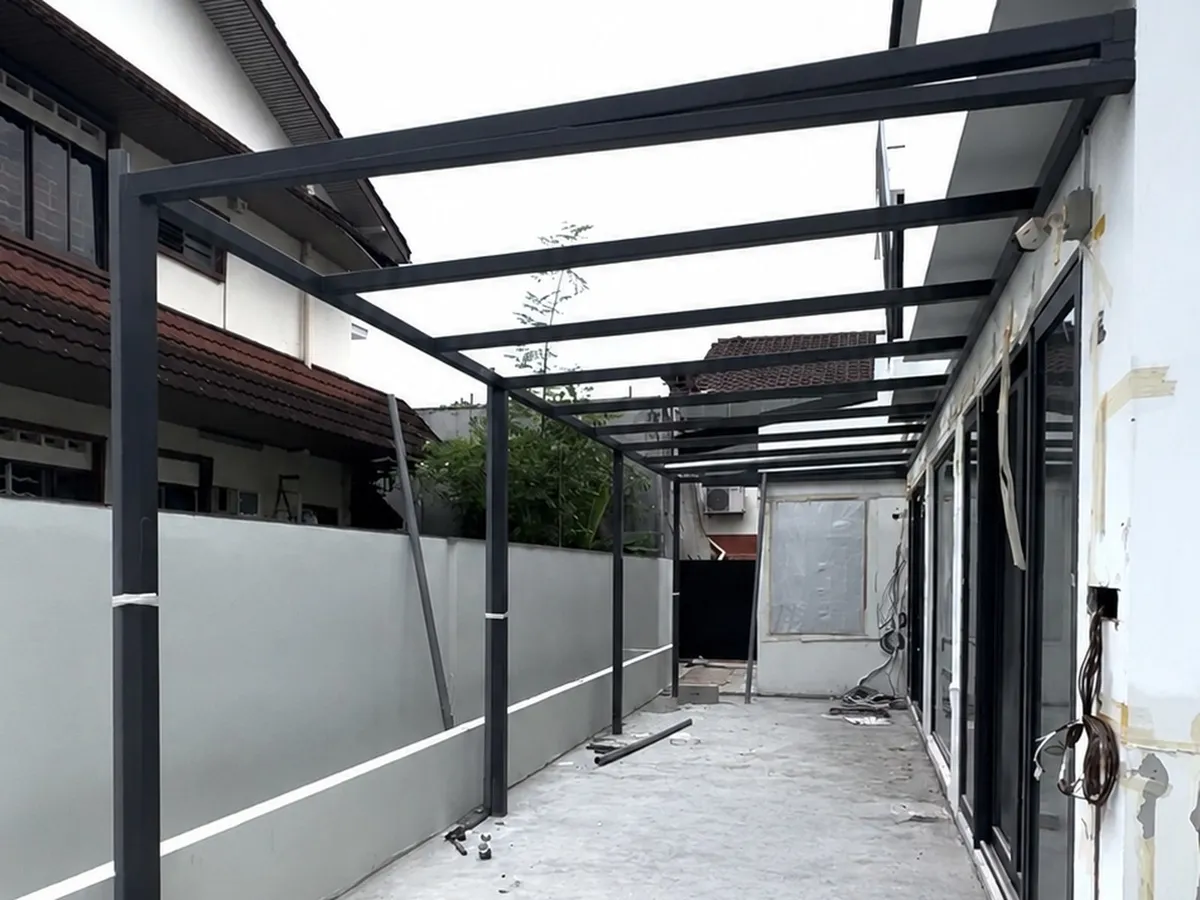
Many homeowners focus on the visible roof panel, but the support structure affects safety, durability, alignment, and long-term performance. A cheaper quote may look attractive at first, but if the structure is weak or not properly protected, it may lead to rust, movement, leakage, or repair issues later.
According to the brochure, key components for roof structures include galvanised steel beams painted with undercoat to prevent corrosion, 4-way welds for a strong structural hold, bolts and screws to secure the structure and panels, and outdoor paint finish for extra protection and customisation.
When comparing roofing quotes, do not only ask, “What roof panel are you using?”
Ask, “What structure is supporting it?”
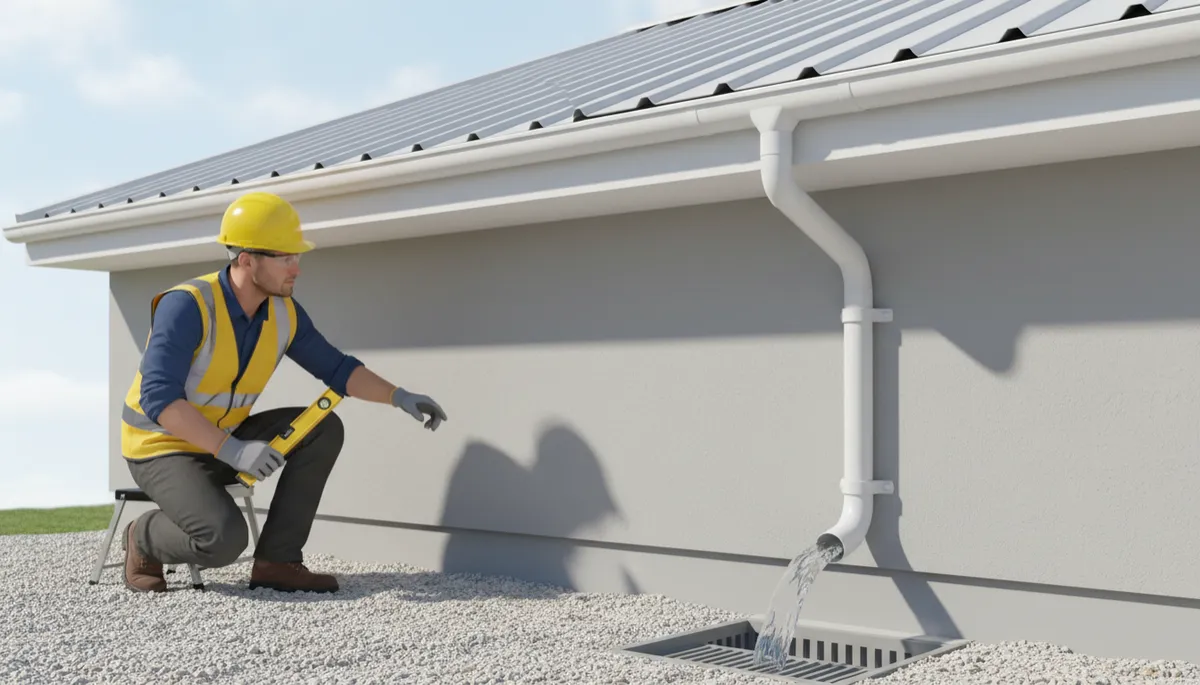
Well-designed drainage systems protect siding, foundations, and landscaping from long-term water damage.
3. Look at Drainage Planning
A roof does not only need to block rain. It needs to control where the rainwater goes.
This is especially important in Singapore, where heavy rain can come suddenly. If the roof slope, gutter, downpipe, or water discharge direction is poorly planned, water may overflow, stain the wall, splash back into the space, or cause leakage later.
Some quotes may include proper drainage planning, while others may only mention the roof panel. That is a major difference.
For example, the Pergola system in the brochure includes adjustable louvres for sunlight, shade, and airflow control, with an integrated drainage system to help channel rainwater away.
When reviewing a quote, ask how water will be directed away, whether gutters and downpipes are included, and where the water will discharge.
A roof without drainage planning is not a complete roofing solution.
4. Compare Finishing Details
Finishing is where the quality of a roofing project often shows.
Two roofs can use similar materials but look very different after installation. The difference may come from panel alignment, capping, sealant work, wall connection, paint finish, underside treatment, and colour matching.
This matters because roofing is often visible from the living room, balcony, patio, car porch, or front of the house. A roof that works well but looks bulky or unfinished can affect the overall appearance of the home.
For homeowners who want a more premium look, Aluminium Wooden Cladding may be considered. The brochure describes it as a modern wooden finish that combines the natural look of wood with the strength and durability of aluminium, giving timber-like warmth without common issues such as warping, rotting, or termite damage.
Ask whether the quote includes capping, wall connection details, sealant work, colour finishing, underside finishing, and any design elements.
5. Check Whether Approval Support Is Included
For some Singapore homes, roofing works may require approval from the MCST, property management, landlord, PE, or relevant authorities.
This is especially important for condominiums, strata properties, rental units, commercial spaces, or installations that affect the external appearance of the building.
A proper contractor should not simply say, “Just install first.”
Roofing Solutions’ brochure lists PE endorsement or authority approval as part of its services and also highlights support with MCST and authority approval.
Before confirming a quote, ask whether approval support is included, what documents can be provided, and whether drawings, specifications, or PE endorsement are needed.
Work should not begin just because the deposit has been paid. If approval is required, it should be clarified before installation is scheduled.
6. Ask About Measurement and Customised Planning
Every home is different.
A balcony, car porch, patio, walkway, landed side yard, or outdoor dining area may have different wall conditions, drainage points, support options, sun direction, and usage needs.
That is why proper site measurement and customised planning matter. The brochure highlights one-stop service from consultation to installation, in-house site measurement, customised planning, and an experienced in-house installation team.
For customised installations, the first site measurement is taken accurately to understand the space, prepare the quotation, and recommend the right solution. However, before fabrication or material ordering begins, final confirmation may still be needed because design decisions between homeowner and contractor can affect roof projection, drainage route, finishing direction, side protection, or wall connection details.
This is not about correcting the first measurement. It is about confirming the final agreed design before production starts.
7. Consider After-Sales Service
A roofing project does not end on installation day.
The real test comes after the roof has gone through heavy rain, strong sun, humidity, and daily use. If a gutter overflows, a joint needs checking, or the homeowner has a concern, after-sales support becomes important.
The brochure highlights reliable after-sales support and service as one of the reasons to choose the company. This should be part of your quote comparison because roofing is a long-term installation.
Ask what the warranty covers, what is excluded, who handles service requests, and how concerns are assessed after installation.
A cheaper quote may not feel cheap if the contractor disappears after the final payment.
8. Compare Whether It Is a Complete Outdoor Solution
Sometimes a roof alone is not enough.
A homeowner may install a roof and later realise the space still gets wet from side rain, feels hot in the afternoon, lacks privacy, or needs decking, lighting, or side protection.
This is where a more complete outdoor planning approach matters. The brochure lists a wide service range including roof extension, Polycarbonate Roofing, Aluminium Composite Roofing, Aluminium Wooden Cladding, Aluminium FluteShield™ Roofing, Tempered Glass Roofing, Pergola, Retractable Fabric Pergola, Motorised Cassette Awning, Outdoor Composite Decking, ZipBlind®, PE endorsement or authority approval, and 3D drawing.
ZipBlind® is also included as an authorised dealer product, with multiple system options for different outdoor needs.
When the roof, side protection, drainage, and finishing are planned together, the space is more likely to feel complete and usable.
Simple Roofing Quote Comparison Checklist
Before choosing a contractor, compare each quote based on:
Factor | What to Check |
|---|---|
Material | What roof type is being quoted and why? |
Structure | Is the support structure clearly stated? |
Drainage | How will rainwater be channelled away? |
Finishing | Are capping, sealant, wall connection, and colour finishing included? |
Approval | Is MCST, PE, or authority support included where needed? |
Measurement | Is there proper site measurement and customised planning? |
After-sales | What support is available after installation? |
Complete solution | Can the contractor advise on ZipBlind®, decking, Pergola, awning, or side protection if needed? |
Final Thoughts
Comparing roofing quotes in Singapore should not be about choosing the lowest number immediately.
It should be about understanding what each contractor is offering, what materials are being used, how the structure is built, how rainwater is managed, how the roof is finished, whether approval support is included, and what kind of after-sales service is available.
Do not just ask, “How much?”
Ask, “What exactly am I paying for, and will this roofing solution still make sense after Singapore weather has tested it?”
A good contractor should be able to answer clearly.
