Awning vs Roof Extension: Choose the Right Shade
Home Improvement, Outdoor Living, Shade Solutions
Awning or Roof Extension: Which One Does Your Singapore Home Actually Need?
Choosing between an awning and a roof extension can change how you use your outdoor space.
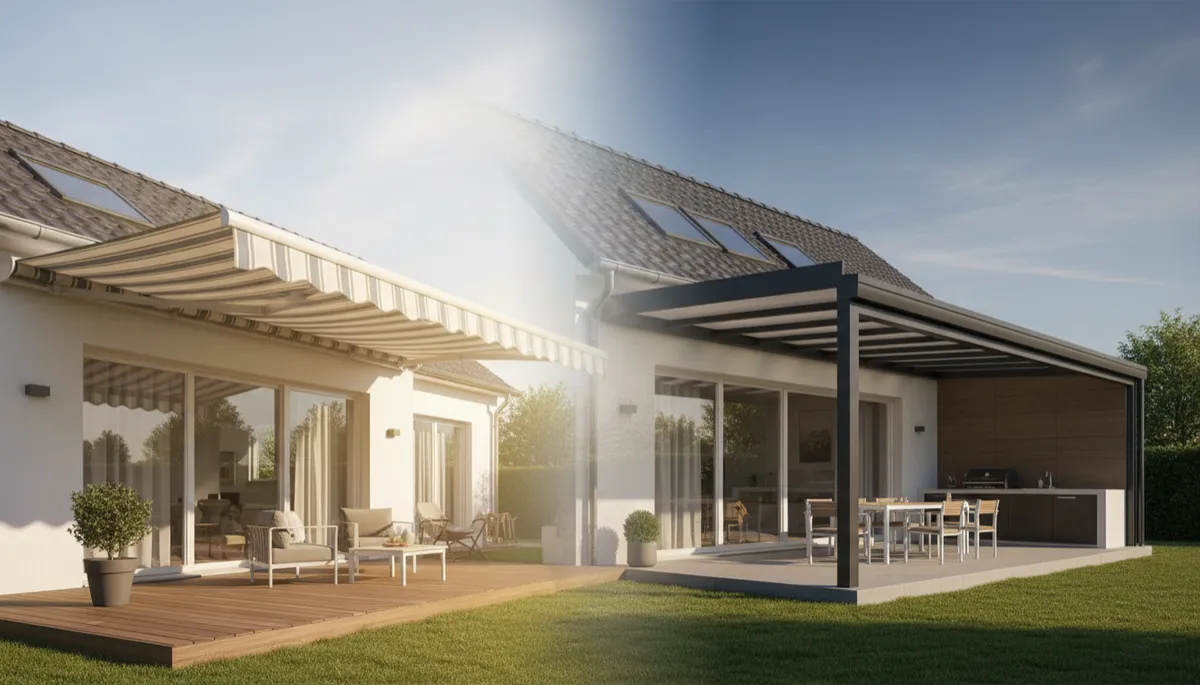
Both options provide shade and shelter, but they serve different needs. An awning is usually better for smaller, targeted protection from sunlight and light rain. A roof extension is a more permanent solution for homeowners who want to create a proper sheltered outdoor area for daily use.
For Singapore homes, the decision is not only about price. It also depends on weather exposure, property type, approval requirements, how often you use the space, and whether you want a flexible shade solution or a long-term roofing structure.
Start With How You Use the Space
Before choosing the product, look at the space honestly.
Do you only need shade over a small seating area, window, entrance, or outdoor corner? Or do you want to transform a patio, balcony, car porch, or side yard into a more usable semi-outdoor area?
If the problem is small and specific, an awning may be enough. If the space is used daily and needs stronger protection from sun and rain, a roof extension may be more suitable.
Many homeowners make the mistake of choosing based only on cost. A cheaper awning may not feel like good value if the area still gets wet during heavy rain. A full roof extension may also be unnecessary if all you need is shade over one sunny spot.
The right solution should match the way the space is actually used.
When an Awning Makes More Sense
An awning is suitable when you need flexible shade without building a full roof structure.
For Singapore homes, it can work well for smaller outdoor areas, windows, entrances, balconies, patios, or compact corners where direct sunlight is the main issue. A motorised cassette awning can be extended when shade is needed and retracted when you want the space to feel open again.
This makes it useful for homeowners who do not want a permanent covered look. It also helps reduce sunlight, glare, and heat exposure in a more targeted way.
An awning may be suitable if:
You only need shade for a specific area
You want a retractable option
You prefer a lighter and less bulky appearance
You want minimal obstruction when the awning is not in use
You mainly need protection from direct sun or light rain
For example, if your balcony or patio is only too hot at certain times of the day, an awning can provide shade without making the whole space feel permanently covered.
What to Consider Before Choosing an Awning
An awning is flexible, but it has limits.
It is not the same as a full roof extension. While it can help with sunlight and light rain, it may not be suitable for heavy rain, strong wind, or spaces that need full-time shelter. Because Singapore weather can change quickly, homeowners should understand how the awning should be used and when it should be retracted.
Awnings are also better for targeted coverage rather than large outdoor areas. If you plan to place outdoor furniture, create a dining area, or use the space regularly during wet weather, an awning may feel too limited.
In simple terms, choose an awning when you need flexible shade.
Do not choose it expecting it to perform like a permanent roof.
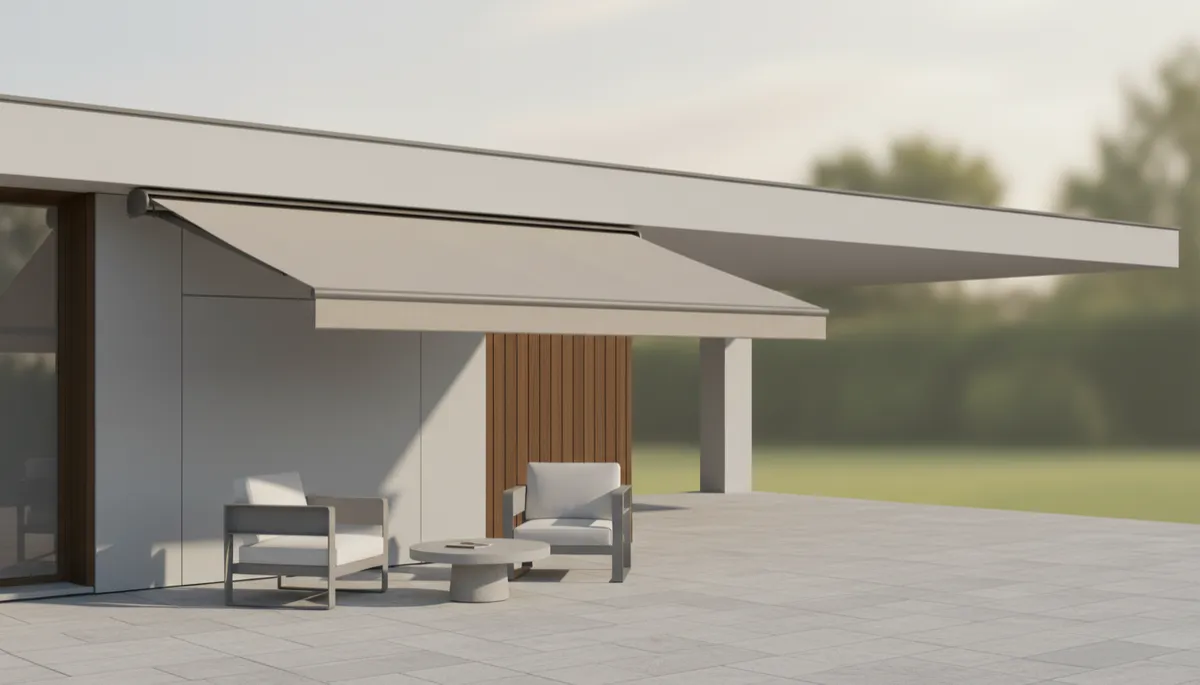
Targeted awnings solve hot spots, while roof extensions reshape how you live outdoors.
When a Roof Extension Makes More Sense
A roof extension is more suitable when you want a permanent sheltered space.
This can be useful for car porches, patios, balconies, outdoor living areas, side yards, walkways, and other areas that are used often. Unlike an awning, a roof extension is designed as a more fixed structure that can provide stronger coverage and better long-term protection when properly planned.
A roof extension may be suitable if:
You want to use the space daily
You need stronger shelter from rain and sun
You want the area to feel like part of the home
You are planning an outdoor dining, laundry, storage, or family area
You want to pair the roof with ZipBlind® for side protection
You prefer a more permanent structure
For Singapore homes, this matters because outdoor spaces are often affected by both top-down rain and side rain. A roof extension can provide overhead shelter, while ZipBlind® may be considered if the area still needs protection from wind-driven rain, glare, or privacy concerns.
Roof Extension Options for Different Needs
A roof extension does not have to mean one fixed material for every home.
If you want stronger shade and a clean modern finish, Aluminium Composite Panel Roof may be suitable. If you want a cooler and quieter covered area, FluteShield™ Roofing may be considered because it is designed with heat and rain noise reduction in mind. If you want natural light, Polycarbonate Roof or Glass Roof may be more suitable, depending on heat exposure and the amount of brightness you want.
For homeowners who want a more premium design finish, Aluminium Wooden Cladding can help create a warmer timber-like look without the common outdoor concerns of natural wood.
The best roof extension depends on what the space needs most: shade, light, comfort, appearance, drainage, or long-term durability.
Structure and Drainage Matter More Than Homeowners Realise
A roof extension is not just a panel installed overhead.
It needs proper structure, support, slope, drainage, wall connection, and finishing. If these details are not planned well, problems may appear later, especially during heavy rain.
For Singapore homes, drainage is especially important. Rainwater should be guided away properly through the correct slope, gutter, and discharge direction. If not, water may overflow, splash back, stain the wall, or create leakage issues.
The structure underneath also matters. A good roofing system should consider proper support, fixing points, corrosion protection, and outdoor finishing. These details may not be obvious at first glance, but they affect how the roof performs over time.
This is why roof extension quotes should not be compared based on roof size alone. The hidden details are often what separate a proper long-term solution from a cheap short-term cover.
Approval May Be Needed
For some properties in Singapore, outdoor roofing works may require approval.
This is especially relevant for condominiums, strata properties, rental units, commercial spaces, or any installation that affects the external appearance of the building. Depending on the property type, homeowners may need approval from the MCST, property management, landlord, PE, or relevant authorities.
This is one area where planning matters before installation begins.
A proper contractor should be able to advise whether approval support may be needed and provide the necessary project details, drawings, specifications, or supporting documents where applicable.
Work should not start simply because a deposit has been paid. If approval is required, it should be clarified before the installation date is fixed.
Can You Combine Both?
In some homes, the answer may not be strictly awning or roof extension.
A roof extension can be used for the main outdoor area, while an awning can be used for a smaller window, side corner, or secondary area that only needs occasional shade. This layered approach can be useful when different parts of the home have different needs.
For example, a car porch may need a permanent roof extension, while a smaller patio corner may only need a motorised cassette awning. A balcony may need a roof and ZipBlind® for stronger weather control, while a window may only need targeted shading.
The goal is not to use the biggest solution everywhere. It is to use the right solution in the right place.
Final Thoughts
An awning and a roof extension both improve outdoor comfort, but they are not meant for the same purpose.
Choose an awning if you need smaller, flexible shade for a specific area and want the option to retract it when not in use.
Choose a roof extension if you want a more permanent sheltered space that can support daily use, stronger rain protection, better structure, and long-term outdoor living.
For Singapore homeowners, the better question is not “Which one is cheaper?”
It is “Which one fits the way I actually use my outdoor space?”
Once you understand that, the choice becomes much clearer.
