
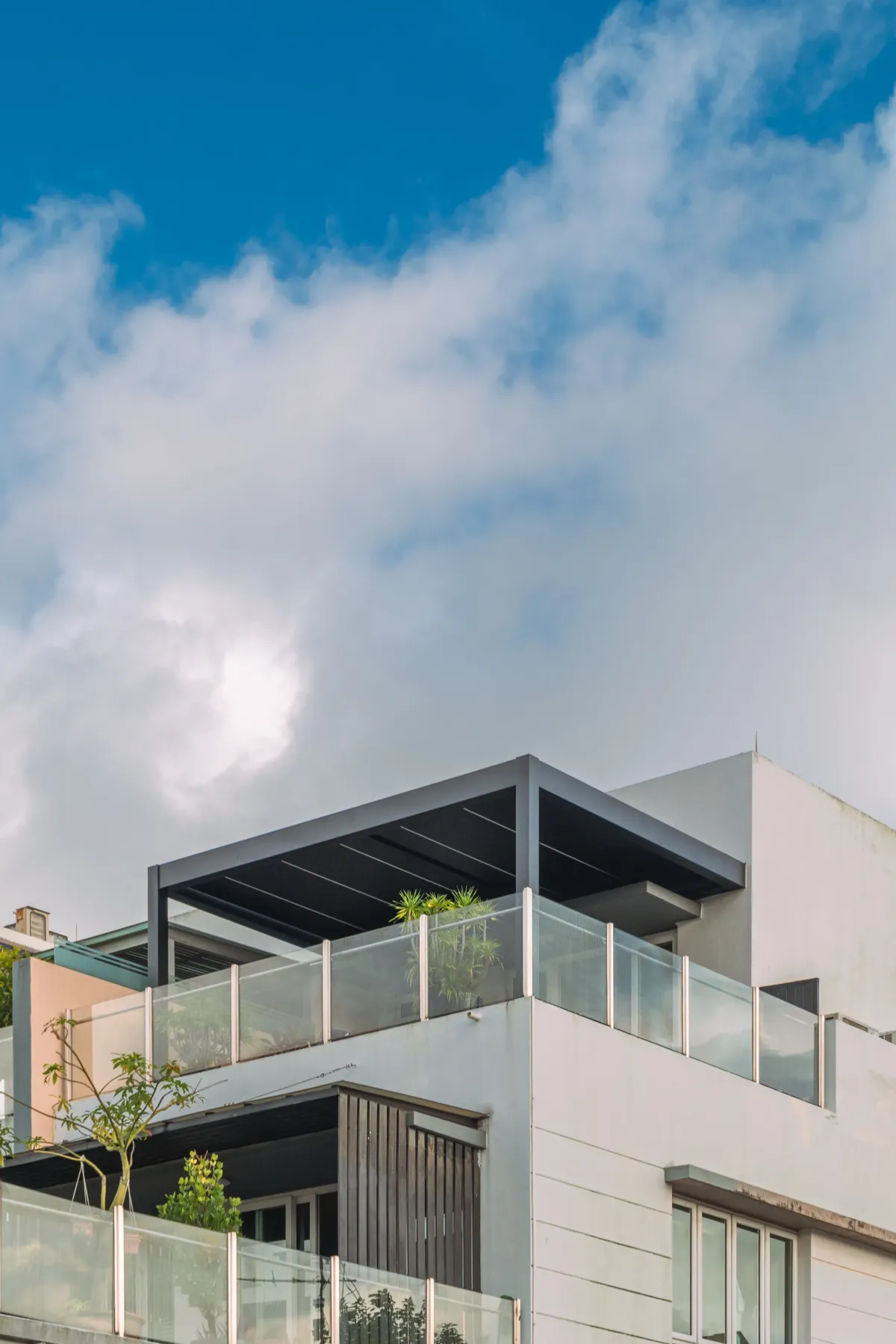
What is A Pergola?
In Singapore’s tropical urban landscape, a pergola is more than a decorative garden feature; it is a strategic architectural intervention designed to bridge the gap between indoor comfort and outdoor living. In a climate characterized by high humidity, intense UV radiation, and sudden monsoon downpours, the definition and utility of a pergola have evolved significantly.
1. Core Definition and Anatomy
A pergola is an outdoor architectural structure consisting of vertical posts or pillars that usually support a roofing grid of cross-beams and sturdy open joists.
Unlike a gazebo, which is typically freestanding and has a permanent, pitched roof, a pergola is defined by its open-air DNA. However, in Singapore, the "pure" open-slat pergola is rare because of the rain. Most local iterations feature a "hybrid" roof—incorporating glass, polycarbonate, or motorized louvres.
The Components:
Columns/Posts: The primary vertical supports. In Singapore, these must be anchored to a concrete footing or reinforced decking to withstand sudden wind gusts during "Sumatra" squalls.
Beams: Horizontal members spanning between columns.
Rafters: Cross-members that sit atop the beams to create the "lattice" effect.
Stringers/Purlins: Smaller elements added on top of rafters for extra shade or to support roofing sheets.
Internal Guttering Systems: Internal Guttering Systems: Unlike basic garden structures, professional Singaporean pergolas use integrated perimeter gutters. These are hidden within the horizontal beams to collect rainwater, which is then funneled through the hollow interior of the vertical posts to the ground level. For high-end residential projects, this system is often designed in collaboration with a landscape company to ensure runoff is seamlessly integrated into your garden’s drainage or irrigation network.
Motorized Louvres (The "Hybrid" Blade): These are adjustable aluminum slats that replace traditional fixed rafters. They can rotate 135 degrees to track the sun for maximum shade or seal shut completely with interlocking gaskets to create a 100% watertight roof during heavy rain.
Base Plate & Anchor Bolts: These are the "feet" of the structure. In Singapore, high-tensile steel base plates are bolted into reinforced concrete footings. This is a critical BCA safety requirement to prevent the structure from lifting during high-wind "Sumatra" squalls.
SS316 Stainless Steel Fasteners: Standard screws will rust within months in Singapore’s 80% humidity. Marine-grade SS316 stainless steel connectors are used to ensure the joints remain structurally sound and free from unsightly rust streaks.
Integrated Side Blinds (Ziptrak/Motorized): Often integrated into the perimeter beams, these vertical screens provide lateral protection from "slanting" rain and increase privacy from neighboring units in high-density areas.
Smart Sensors & Control Hub: High-end units include rain sensors that automatically close louvres at the first drop of rain and wind sensors that open them during extreme gusts to reduce wind load on the frame.
LED Strips & Perimeter Lighting: Integrated into the beams or louvres, these components allow the pergola to function as a primary living space at night without the need for external, exposed wiring.
Singapore’s Leading BCA-Compliant Pergolas
Upgrade to a durable, high-performance structural solution built for the tropics. Get your instant price estimate today at roof.com.sg.
2. The Singapore Context: Climate Adaptation
A pergola designed for a temperate climate (like the UK or Australia) will fail in Singapore within three years if not adapted.
UV and Heat Management
The Singapore sun is vertical and punishing. A standard open-slat pergola provides "dappled shade," which is often insufficient for 2:00 PM heat. Local designs often use tilted rafters or motorized louvres to block direct overhead sun while maintaining airflow.
Rain Protection (The Hybrid Shift)
In Singapore, a "true" pergola is often non-functional for 167 days of the year (the average number of rainy days). Consequently, 90% of Singaporean pergolas utilize:
Tempered Glass: Provides a view of the sky but requires frequent cleaning due to algae.
Polycarbonate Sheets: A cost-effective, lightweight alternative with UV-filtering properties.
Retractable Awnings: Fabric covers that can be deployed during rain.
3. Material Science for the Tropics
Choosing the wrong material in Singapore leads to rot, warping, or corrosion.
A. Aluminum (The 2026 Gold Standard)
Aluminum has overtaken timber as the preferred material for high-end Singaporean homes.
Pros: Zero rust, lightweight, allows for hidden internal drainage, and can be powder-coated to look like wood.
Cons: Higher upfront cost than low-grade timber.
B. Timber (The Traditional Choice)
If using wood, only Hardwoods are viable in Singapore.
Chengal: The "King" of local timbers. High resin content makes it naturally resistant to termites and rot. However, it is prone to "bleeding" (leaking brown sap) during the first few rains.
Balau/Ironwood: Extremely dense and durable, though prone to fine surface cracks (checking) in the sun.
Avoid: Treated Pine or Spruce. These are softwoods that will rot in the Singapore humidity regardless of treatment.
C. Wood Plastic Composite (WPC)
A mix of wood fiber and plastic. It is increasingly popular for its "zero-maintenance" promise, though it can become very hot to the touch under direct sunlight.
4. Legal and Regulatory Framework (URA & BCA)
This is the most critical section for Singaporean homeowners. You cannot simply build a pergola of any size.
URA (Urban Redevelopment Authority)
Pergolas are generally considered "un-enclosed" spaces.
Gross Floor Area (GFA): If the pergola is roofed (e.g., with glass or polycarbonate), it may be counted as GFA. However, under current 2026 guidelines, small-scale shelters (typically under 10 sqm) or those with significant "void" spaces in the roof may be exempt.
Setback Requirements: In landed properties, pergolas must usually respect the physical "setback" lines (the distance from your boundary wall).
BCA (Building and Construction Authority)
Structural Approval: If the pergola is large or involves heavy materials like reinforced concrete or structural steel, a Professional Engineer (PE) must certify the drawings.
Fire Safety: If the pergola is near a boundary, fire-rated materials may be required to prevent "fire spread" to neighboring lots.
5. Modern Innovation: The Bioclimatic Pergola
In 2026, the "Bioclimatic" pergola is the dominant trend in Singapore’s luxury residential market (Sentosa Cove, Bukit Timah).
How it works:
Motorized Louvres: The roof slats can rotate from 0° to 135°.
Sensors: Rain sensors automatically close the louvres at the first drop of rain; wind sensors open them during high-velocity winds to prevent the structure from acting like a sail.
Integrated Drainage: Water is funneled through the louvres into the support beams and down through the columns, exiting at the base.
6. Functional Applications in Singapore
Pergolas are used strategically depending on the property type:
7. Maintenance Requirements
Singapore’s humidity promotes bio-film growth (algae and moss).
Timber: Requires sanding and re-staining every 12–18 months to prevent UV graying.
Aluminum: Requires a simple wash with soap and water every 6 months to remove salt spray (especially near the coast) and soot.
Glass Roofs: Require monthly cleaning. Tropical rain carries dust, which settles and creates "streaking" as it dries.
8. Cost Breakdown (Singapore 2026 Estimates)
Costs vary based on material and size. Prices are quoted in SGD per square foot (psf) of floor area covered.
Note: Professional Engineer (PE) endorsement fees typically range from $2,000 to $5,000 per project if required.
9. Pergola vs. Other Structures
To ensure you are actually looking for a pergola, compare it to its "cousins":
Trellis: Often confused with a pergola, but a trellis is typically a 2D latticework for climbing plants. A pergola is a 3D structure you can walk under.
Gazebo: Octagonal or round with a solid, permanent roof. Too "heavy" for modern Singaporean minimalist aesthetics.
Veranda: An extension of the house's roof. A pergola is distinct and usually has its own structural identity even if attached to the main building.
10. Summary of Benefits
Value Appreciation: A well-built, BCA-compliant pergola can increase a property's valuation by creating "usable" square footage out of "raw" outdoor space.
Thermodynamics: By shading the external walls of the main house, a pergola can reduce the "Urban Heat Island" effect, lowering indoor air-conditioning costs.
Biophilic Living: It provides a framework for vertical gardening (e.g., Thunbergia grandiflora or Bauhinia Kockiana), which is essential for high-density Singaporean living.
A pergola in Singapore is not just a carpentry project; it is a structural investment. Given the 2026 push toward "Smart Homes," integrating lighting, fans, and automated weather-proofing is now the standard for any high-quality installation.
