
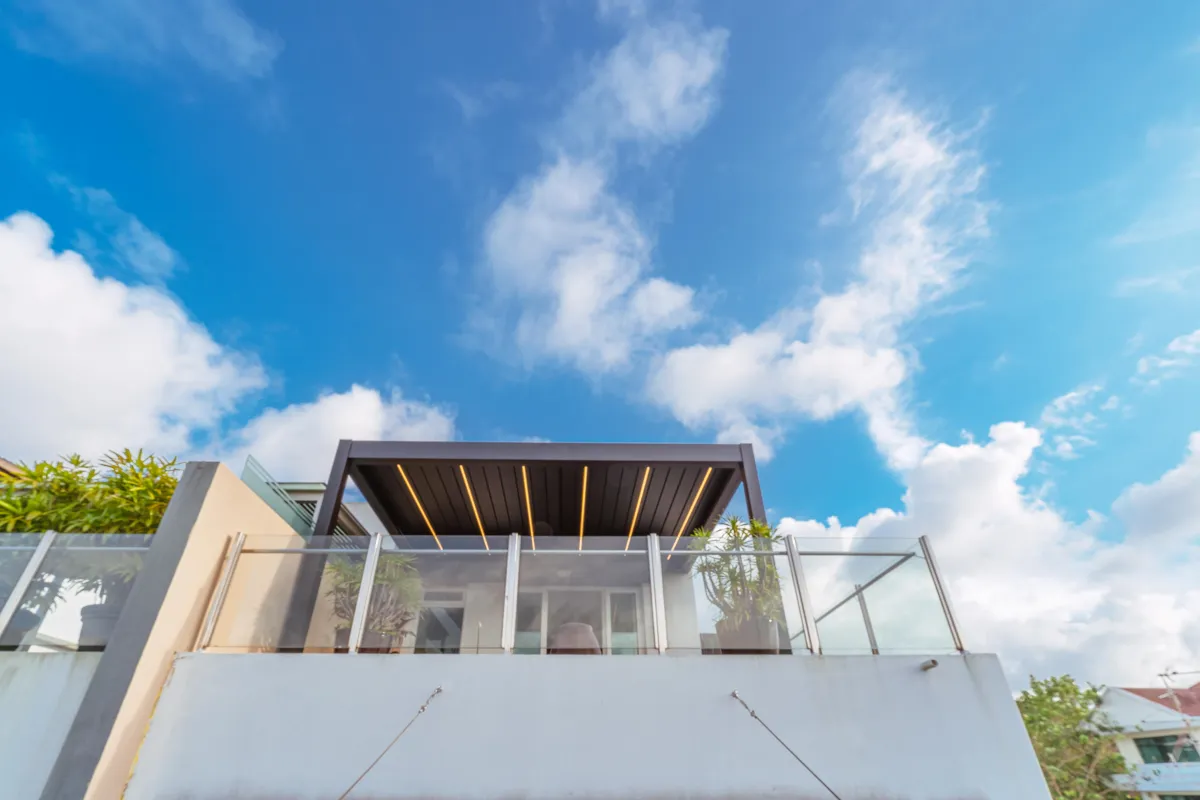
Does a Pergola Need URA or BCA Planning Permission for Landed Property in Singapore?
Adding a pergola to your landed home is a popular way to create an outdoor living space — a shaded garden retreat, an al fresco dining area, or a stylish pool deck feature. But before you call the contractor, you need to know whether your pergola requires approval from the Urban Redevelopment Authority (URA) or the Building and Construction Authority (BCA).
The short answer: a simple open-lattice pergola may not require formal approval from either authority, but the moment it grows in size, gains a solid roof, or pushes your site coverage beyond permissible limits, both URA and BCA approvals can come into play — and getting it wrong can result in stop-work orders, fines, and costly demolition. Here is a thorough breakdown of the regulatory landscape, drawing directly from official government sources.
Understanding the Two Regulatory Bodies
In Singapore, landed property renovations are governed by two separate authorities with distinct roles:
URA handles planning permission — that is, whether a structure is permissible given your property's land use zone, site coverage limits, Gross Floor Area (GFA), setback requirements, and Envelope Control (EC) guidelines. Planning permission is a statutory requirement that property owners must obtain before starting any development or building works, regulating the use of land and buildings to ensure development is carried out in a sustainable and responsible manner.
BCA handles structural safety — whether the proposed structure requires a building permit and formal structural plan approval, and whether the works must be carried out by a licensed builder under a qualified person (QP). A permit is required for all building works, except for those classified as insignificant building works, with the exceptions listed in the First Schedule of the Building Control Regulations.
These approvals are independent of each other. A pergola may need both, one, or neither — depending on its design and your property's specific situation.
The URA Perspective: Does a Pergola Affect GFA or Site Coverage?
From a planning standpoint, the key question is whether your pergola constitutes a "building" under URA's development control guidelines, and whether it eats into your GFA or site coverage limits.
A classic pergola — an open-sided structure with a lattice or open-beam roof (no solid covering) — is generally not counted as GFA under URA's Gross Floor Area handbook, because it does not form enclosed or semi-enclosed floor space. However, the structure still counts towards site coverage, which is the proportion of your land that may be built upon. The development proposal must comply with all prevailing development control guidelines including minimum plot size, plot width, building setback, and site coverage.
For most landed properties, the maximum allowable site coverage is 50% of the land area. Your pergola's footprint — the area it occupies on the ground — will be added to your existing building's site coverage calculation. If building the pergola pushes your total site coverage beyond the permissible limit, you will need to apply for a URA waiver or planning permission before proceeding.
There are also setback requirements to observe. Structures must maintain minimum distances from the front, side, and rear boundaries of your plot. A pergola built too close to a boundary wall would violate these controls and require either a redesign or a formal URA waiver.
If your pergola does not exceed site coverage limits, respects setback requirements, and is within a straightforward residential zone (not in a Good Class Bungalow Area, Conservation Area, or Special Control Area), the works can typically be processed via a URA Plan Lodgment rather than a full planning permission application — a simpler and faster route.
For plan lodgment to apply, the development proposal must comply with all prevailing development control guidelines and street block plans; where the proposed works involve deviations from prevailing development control guidelines, prior waiver approval is to be obtained from URA's Development Control Group. Crucially, a Qualified Person — a Registered Architect or Professional Engineer — must be appointed to prepare and lodge the plans.
If your pergola has a solid or substantial roof covering (e.g., polycarbonate sheeting, glass, or metal roofing) rather than an open lattice, URA may treat it differently. A covered, enclosed structure with walls would likely be counted as GFA, significantly increasing the regulatory complexity.
The BCA Perspective: Is Your Pergola an "Insignificant Building Work"?
On the structural side, BCA exempts certain works from requiring a building permit under the First Schedule of the Building Control Regulations. These are called "insignificant building works." The law provides a "safe harbour" list of works that are exempt from the requirement of a building permit, and if a planned work is not on this list, or exceeds the specific conditions of an item on the list, it is not insignificant and requires BCA approval.
The most relevant exemptions for a typical pergola are:
Trellis: Any trellis is an insignificant building work under the First Schedule of the Building Control Regulations. This is significant: a pergola that functions as a decorative, open-beam trellis structure — without a solid roof and without enclosed sides — may qualify for this exemption entirely, meaning no BCA permit is required.
Single-storey shelter (up to 50 sqm in a residential private space): Any single storey shelter that is in a private space within a residential building, where the span of beam does not exceed 6 metres, the span of any cantilever does not exceed 3 metres, the sides are enclosed with lightweight material, windows or doors, the sides do not act as safety barriers, and the roof is constructed of lightweight material, does not require BCA approval if it does not exceed an area of 50 square metres.
Single-storey lean-to extension: Any single storey lean-to extension with roof covering of tiles, or of any lighter material, in any bungalow, semi-detached, terrace or linked house is an insignificant building work.
What this means in practice: a relatively simple pergola with an open or lightweight roof, modest dimensions, and no structural load-bearing integration with your main house may fall squarely within the exempted categories and need no BCA permit. However, once the structure grows in size, uses heavier materials such as reinforced concrete columns, or involves structural connections to the existing building's beams or slabs, a BCA permit will be required and a Professional Engineer must be engaged.
Section B (Structural Design and Construction) has no exemption — compliance is always required for landed houses. This means even exempt structures must still be structurally sound; the exemption only means you do not need to formally submit plans to BCA, not that safety standards do not apply.
When Both URA and BCA Approval Are Needed
If your pergola is large (e.g., covers a substantial portion of the garden), has a solid roof, is attached to the main structure, or is in a sensitive zone (Good Class Bungalow Area, Conservation Area), you will likely need both URA planning clearance and BCA building plan approval. Building plan submissions to BCA are typically made after URA's planning permission and technical department clearances have been obtained.
In this scenario, you will need to appoint a Registered Architect as your QP for the URA submission, and a Professional Engineer for the structural plan submission to BCA. All A&A projects require a team of Qualified Persons and have regulatory fees, with soft costs for professionals and submission fees easily totalling $60,000 to $150,000 for larger projects. For a modest pergola, costs will be far lower, but professional fees for the QP and PE are still a budget line item to factor in.
Key Questions to Ask Before You Build
Before proceeding, work through these practical checks:
1. Check your current site coverage. Calculate whether adding the pergola's footprint exceeds your permissible site coverage. Your architect or a URA pre-consultation can clarify this.
2. Verify setback distances. Measure from your proposed pergola to all property boundaries to ensure compliance.
3. Assess the roof material and structure. An open lattice or trellis is treated very differently from a polycarbonate or metal roof panel — the latter triggers more scrutiny from both URA and BCA.
4. Check if your property is in a Special Control Area. Properties in Good Class Bungalow Areas, Conservation Areas, or other Special Control Areas face stricter controls. Properties within a Conservation Area, Good Class Bungalow Area, or Special Control Area are excluded from the simpler plan lodgment route and require full planning permission.
5. Do not rely on your contractor alone. Never commence construction or demolition without the necessary Planning Permission from URA and Building Plan approval from BCA. Unauthorised structures can result in stop-work orders, fines, and costly demolition at the owner's expense.
Get It Right From the Start
Navigating Singapore's regulatory framework for landed property works can feel daunting, but the consequences of getting it wrong — unauthorised structures, enforcement actions, and legal liability — are far more stressful than doing the paperwork upfront. Whether you are planning a simple timber trellis or a substantial covered terrace, the smart first step is to engage a Registered Architect or a firm experienced in landed property additions and alterations.
They can quickly assess your site coverage, check the applicable street block plan, determine whether URA lodgment or full planning permission is needed, and advise whether your pergola design falls within BCA's exempted works.
Not sure whether your pergola plans need URA lodgment, BCA approval, or both?
As an experienced pergola contractor, we've helped countless landed homeowners navigate the URA and BCA approval process — so you don't have to figure it out alone. We'll assess your property's site coverage, setback requirements, and structural design to ensure everything is compliant before a single post goes into the ground. Get a free consultation on WhatsApp today — we'll walk you through exactly what your project needs.
